
DIGIT course: Digitalization and Cultural Identities: Analog Pasts, Digital Futures and Technosocial Challenges
The course, designed for PhD students and post-docs, discusses the interplay of digital technologies, technosocial imaginaries, and collective identities, and the ensuing shaping of cultural identities as part of historical processes.
The empirical part of the course focuses on three specific cases, in which the interplay of digitalization, imagined futures, and cultural identities are manifested, namely the cases of Sami people in the Nordic countries, the social inclusion of resettled refugees in New Zealand, and the online delivery of public services in Norway.

When: 1-4 Des, 2025
Where: UiA, Campus Kristiansand
Registration: https://nettskjema.no/a/550153
Deadline for registration: 20 Nov
Language: English
ECTS Credits: 3,5
The course is open to DIGIT and non-DIGIT members. DIGIT members will have priority access. It is also possible for DIGIT members to attend the course without completing the course assignment and receiving ECTS credits.
The maximum number of students is 20.
Photo: Lisa Mari Bynes
The course is developed by our partners at the University of Agder (UiA) and is part of the PhD Programme in Social Sciences at UiA. For access to the latest information, visit the course page at UiA: TFL603 Course Page.
Content
This DIGIT course is part of the PhD programme in Social Sciences, specialisation in Information Systems at UiA. More information will be published on their homepage closer to the course date.
Over the recent decades, the rapid process of digitalization has transformed the ways in which we communicate, but also the ways in which we perceive ourselves and others. An important part of this perception is related to how we relate to pasts and futures (both our own pasts and futures and those of others) to develop and/or maintain our cultural identities, which in their core are historical, i.e. history made.
The course, designed for PhD students and post-docs, discusses the interplay of digital technologies, technosocial imaginaries, and collective identities, and the ensuing shaping of cultural identities as part of historical processes. It is structured on two core elements, one theoretical and the other empirical.
The theoretical elements consist of an introduction to approaches on
the relation between technological evolution (with emphasis on digitalization) and cultural identity;
the historical core of cultural identities, especially of the minority identities, which are unavoidably related to historical narratives;
the historical evolution from analog to digital societies and how this evolution altered identities and self-identities;
the ways in which the anticipation of digital technosocial futures alters historical and social consciousness, identification and self-identification.
The empirical part of the course focuses on three specific cases, in which the interplay of digitalization, imagined futures, and cultural identities are manifested, namely the cases of Sami people in the Nordic countries, the social inclusion of resettled refugees in New Zealand, and the online delivery of public services in Norway.
Although these three cases report experiences from different contexts, they all have a common conceptual thread: the interplay of the social and the technical and the shaping of cultural identities
Upon successful completion of the course, the participants will be able to:
Implement the relevant theoretical perspectives into their own projects.
Understand the relevant concepts (e.g., digitalized historical consciousness, technosocial historical futures, analog pasts vs digital futures, etc.) and apply them in their own work.
Discuss the relationship between key theoretical approaches and the relevant empirical evidence.
Analyse how the cultural identities of minorities are influenced (and sometimes transformed) by the evolution of digital technologies.
Discuss how digitalization alters historical evolution and how this alteration influences the formation and/or maintenance of historical and cultural identities.
Be aware of how digitalization alters the perception of identities and self-identities.
Evaluate the appropriateness and usability of the theoretical approaches and empirical evidence discussed in the course in relation to their own research interests.
Apply the relevant insights in their operation as members of national and local societies and as citizens.
Teaching and learning methods
The course will be delivered in four consecutive days. It will be structured as a flipped classroom course. Each of the theoretical elements of the course (see above) will be discussed in a podcast series, which will be available to the participants at least one week before the physical sessions. The physical sessions follow a seminar format. The participants initiate the discussions on the topics relevant for each session, the course providers will facilitate and guide the discussions.
Assessment
A reflective essay on the theoretical implications of the topics discussed in the course on their research. Grade: approved/not approved.
Financial support
For DIGIT participants residing outside Kristiansand, DIGIT will cover expenses related to travel and accommodation. For travel we cover a maximum of 2700 NOK. Once your place on the course is confirmed, contact us for more details.
Course leader: Antonio Díaz Andrade
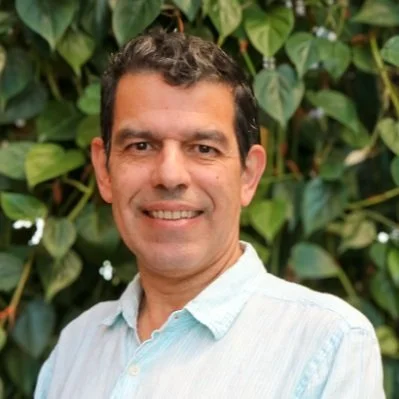
Antonio Díaz Andrade is a Professor of Information Systems at the University of Agder, Norway. As a researcher in the information and communication technology for development (ICT4D) area, he is heavily involved in the ICT4D community as an author, presenter, lecturer, mentor, editor and reviewer.
He currently serves as the elected President of the Special Interest Group on ICT and Global Development (GlobDev) of the Association for Information Systems. He leads the ICT4D Research Group at the University of Agder. His research on qualitative research methods supports and supplements his ICT4D endeavours.
Photo: University of Agder
Please feel free to contact the DIGIT coordinator should you have any practical questions.
For questions related to the course content, please contact Antonio Díaz Andrade.