
Workshop: Understanding and Re-Imagining the Digital Welfare State
This two-day workshop turns its attention to both the present and the future of digital welfare. We ask not only how digitalisation is reshaping welfare governance and experience, but also how it might be reconfigured to serve democratic values, social justice, and human flourishing. What would it take to design welfare technologies that empower rather than control, that foster solidarity instead of suspicion, and that open new spaces for participation and care?
When: 12-13 Feb, 2026
Where: OsloMet, Pilestredet 46, Room PA329, and Pilestredet 42, Room Q1015, and Room Q1050, Oslo
For: Early career researchers including members and alumni of DIGIT research school.
Costs: Attendance at the conference is free.
Travel grants: Limited travel grants are available for early career researchers who do not have access to institutional funding. For DIGIT members with an accepted paper, travel and accommodation expenses will be fully covered by DIGIT.
The workshop is only open for participants with an accepted abstract.
Photo: Skjalg Bøhmer Vold/OsloMet
About the workshop
Across Europe and beyond, welfare systems are increasingly governed through digital infrastructures: automated decision-making, predictive analytics, and large-scale data collection. These developments, often framed as efficiency gains or fraud prevention, have in practice intensified conditionality, expanded surveillance, and deepened the exclusion of society’s most vulnerable members. Scholars and advocates have cautioned against a “digital welfare dystopia” where rights, dignity, and equity are sacrificed in the name of modernization.
At the same time, to re-imagine better futures we must first understand the digital welfare state as it exists today: its technologies, its policies, its consequences for claimants and frontline workers.
This two-day workshop turns its attention to both the present and the future of digital welfare. We ask not only how digitalisation is reshaping welfare governance and experience, but also how it might be reconfigured to serve democratic values, social justice, and human flourishing. What would it take to design welfare technologies that empower rather than control, that foster solidarity instead of suspicion, and that open new spaces for participation and care?
We invite critical, creative, and speculative contributions that balance analysis with imagination. The aim is to create a space for interdisciplinary dialogue across social science, humanities, criminology, law, and design, bringing together those who study what is with those who imagine what could be.
Invited Plenary Speakers
We are delighted to welcome Professor Anne Kaun (Södertörn University), whose research spans media theory, algorithmic culture, automation, and civic participation, and Professor Morgan Currie (University of Edinburgh), whose work focuses on automated social services, data justice, and participatory mapping. Their contributions will anchor our conversations on both the lived realities and possible futures of the digital welfare state.
Programme
Thursday 12 February
Pilestredet 46, room PA329
08:30 – 09:00: Coffee and registration
09:00 – 09:20: Welcome by the organizers
09:20 – 10:10: Panel 1: Social policy and the digital welfare state
Chair: Lior Volinz
Cassy Juhasz
Reconceptualising social inclusion: “samenkomen zonder te problematiseren”
Anna Di Palma
Digitalization and welfare state centralization and decentralization: the case of employment assistance in Italy and Denmark
Olga Usachova
From Power Grids to Welfare Rights: Energy Cybersecurity in the Digital Welfare State
10:10 – 10:20: Coffee break
10:20 – 11:10: Panel 2: Institutions, discretion, and infrastructures
Chair: Lior Volinz
Rebecca Spruijt
Negotiating discretion in the digital welfare state: interactions between street-level and system-level bureaucrats
Gunhild Tøndel
Body, home, state: Goffman and the total institution after the infrastructural turn
Torjus Solheim Eckhoff
Computing the Norwegian welfare state. Infrastructures and new forms of compulsion
11:10 – 11:20: Coffee break
11:20 – 12:10: Panel 3: Digital welfare incidents, discrimination, and reform
Chair: Lior Volinz
Sangh Rakshita
Digitalizing Structures of Discrimination: Diagnosing Algorithmic Discrimination in Welfare States
Rachel Humphris & Nika Mahnič
(Un)Learning Deservingness: bordering from within the welfare/workfare state
Maarten Bouwmeester
Curbing Digital Welfare Dystopia? Reflections on Post-Scandal Reforms in Australia and the Netherlands
12:10 – 13:00: Lunch
13:00 – 16:30: Plenary Sessions
Pilestredet 42, room Q1015
13:00 – 13:20: Welcome and introduction
13:20 – 14:05: Plenary lecture: Anne Kaun
14:05 – 14:15: Clarification questions from the audience
14:15 – 14:30: Coffee break
14:30 – 15:15: Plenary lecture: Morgan Currie
15:15 – 15:25: Clarification questions from the audience
15:25 – 15:40: Coffee break
15:40 – 16:30: Joint discussion with the audience
Friday 13 February
Pilestredet 46, room PA329
09:00 – 10:10: Panel 4A: Welfare surveillance (I)
Chair: Marijke Roosen
Martyna Bell
National Digital Welfare Strategies Oscillating between Care and Control. A comparative document analysis of digitalization strategies in Norway and Poland
P. Arun
Tech-Enabled Governance and Surveillance in India’s Digital Welfare State
Nika Mahnič
Milking the rent cow: funding welfare from the proceeds of the right fraud
10:10 – 10:20: Coffee break
10:20 – 11:30: Panel 4B: Welfare surveillance (II)
Chair: Marijke Roosen
Margot Kersing
Bias by design: how political views on benefit recipients are embedded in unemployment technologies
Mattéo Bard, Carina R. Nasser, Sruthi Vanguri, Stefania Milan
No Opting Out: The Structural Dependency of Digital Welfare Infrastructures
Justin Haugland-Pruitt
The reluctant cyborg
Anders Underthun & Vidar Bakkeli
Algorithmic control of electronic patient records: a case of co-determination and negotiation about an automated surveillance system in a Norwegian hospital
11:30 – 11:40: Coffee break
11:40 – 12:50: Panel 5: Law and governance
Chair: Marijke Roosen
Malou Beck
Another ‘Human-in-the-Loop?’ How Danish and Dutch Ombudsman Cultures Shape Administrative Oversight in the Digital Welfare State
Suay Ergin, Valerie Verdoodt, Eva Lievens
The impact of digital-by-default public services on vulnerable groups: an analysis through the lens of the Right (Not) to Use the Internet (R(N)2UI)
Janne Petroons
Taking Care of Due Care: ADM in Social Assistance
Wes Damen
Imagining social security without surveillance. Exploring the promises of secure multi-party computation for exchanging information in the domain of social security
12:50 – 13:30: Lunch
13:30 – 14:40: Panel 6: Negotiating welfare through daily practices
Chair: Marijke Roosen
Signe Mikkelsen
Reimagining digital welfare: relational foundations for care and governance in the digital welfare state
Naomi Creutzfeldt, Sophia Taha, Tracey Varnava
Digital Justice Journeys: Re-Imagining how people could claim welfare benefits in England, pushing back against exclusive-by-design systems
Rana Kuseyri
Filtering noisy data from signals for help: welfare recipients’ experiences in navigating the Dutch data welfare state
Christian Sørhaug, Hanna Ihlebæk & Geir Haugarvold
Digital technologies and the self-service welfare society: experiences and imaginaries from people in vulnerable situations
14:40 – 15:30: Creative futures lab. Session 1: Mapping dystopian futures
Pilestredet 42, room Q1050
Participants work in small, mixed groups (5–6 people) to develop:
dystopian scenarios of the digital welfare state
focusing on exclusion, surveillance, automation, and breakdowns of care
15:30 – 15:40: Coffee break
15:40 – 16:30: Creative futures lab. Session 2: Imagining utopian / alternative futures
Groups re-work or respond to dystopias by imagining:
emancipatory, caring, or just digital welfare systems
alternative data practices
different roles for the state, citizens, and technology
16:30 – 17:15: Gallery walk & plenary discussion
Groups present their futures
Collective discussion:
What futures do we want to avoid?
What futures feel worth working toward?
17:15 – 17:30: Closing discussion & next steps
Publication and collaboration ideas
Final reflections
Guiding Questions
How is the digital welfare state currently being implemented across different contexts, and with what consequences for claimants, frontline workers, and institutions?
What forms of surveillance and monitoring are embedded in welfare technologies, and how do they shape experiences of inclusion, exclusion, and conditionality?
To what extent could welfare surveillance be repurposed to a tool of care rather than control?
How do digital welfare systems affect marginalized groups differently (e.g. migrants, people with disabilities, ethnic minorities, or low-income households)?
What conceptual tools can help us reimagine welfare beyond logics of efficiency, surveillance, and conditionality?
How might digital infrastructures be repurposed to strengthen equity, participation, and trust?
What role could design, activism, or policy innovation play in building more democratic digital welfare futures?
How can lived experiences of welfare claimants and frontline workers inspire both critique and alternative imaginaries?
What lessons can be drawn from national variations, grassroots practices, or experimental projects that challenge the dominant trajectory?
Responsible resarchers
Dr Marijke Roosen
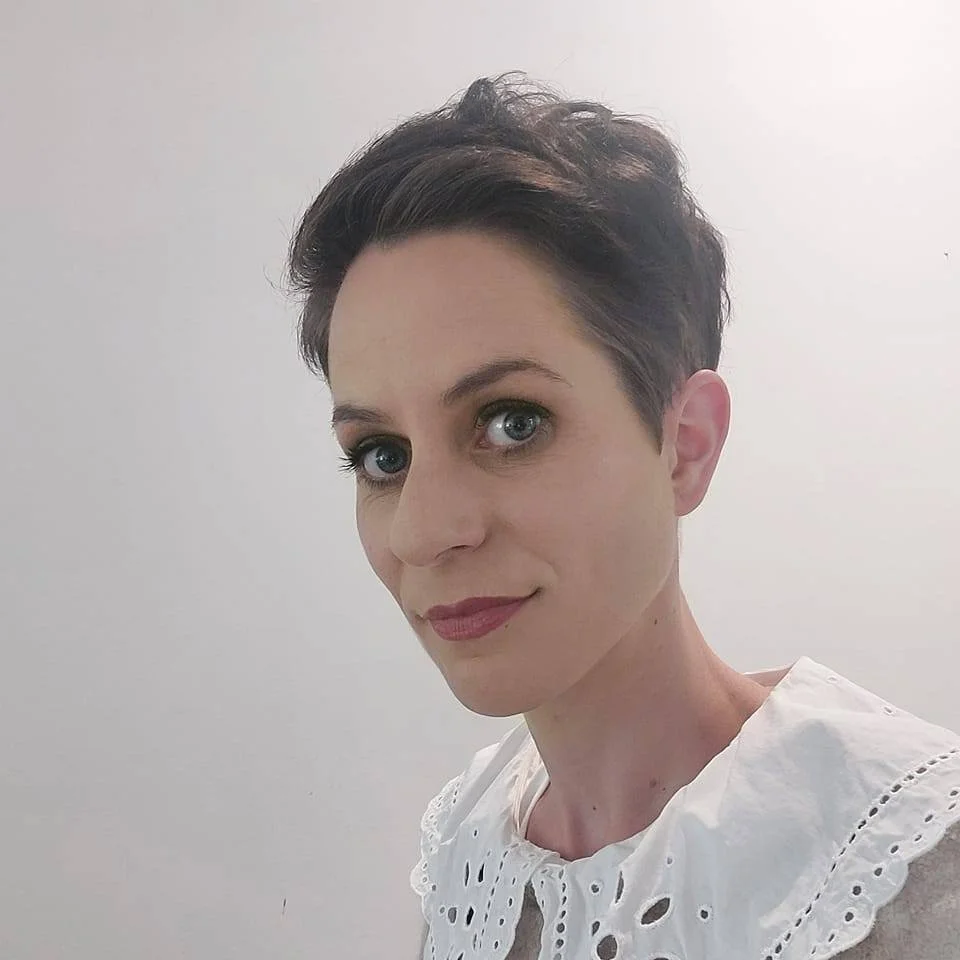
Marijke Roosen is a DIGIT member and a MSCA postdoctoral researcher at OsloMet. Her research focuses on surveillance in the penal field, currently extending to welfare surveillance. She holds a PhD in criminology and she has previously worked in the fields of gender studies and law and technology. She has worked as a senior researcher at Demos Helsinki, where she contributed to an ethical framework for human-robot interaction. Marijke is an STS enthusiast and a board member of the Dutch Journal of Gender Studies.

Dr Lior Volinz
Lior Volinz is a researcher devoted to the study of surveillance and security technologies and practices, as well as urban conflicts, with a strong interest on their social and political implications. Lior is currently working as a researcher at Institute of Criminology at the Faculty of Law in Ljubljana, where he works on the MSCA-ERA postdoctoral fellowship project, SURVEILWEL – ‘Digital Seams in the Social Safety net’, which focuses on welfare surveillance and its social consequences. Lior holds a PhD from the University of Amsterdam (2019), where he defended his dissertation at the department of Human Geography, Urban Planning and International Development.
This workshop is with support from DIGIT research school, the Marie Skłodowska-Curie Fellowship; and the Institute of Criminology, Faculty of Law, University of Ljubljana.
Please feel free to contact the DIGIT coordinator should you have any practical questions.
For questions related to the workshop please contact Marijke Roosen or Lior Volinz