
DIGIT Conference: “We need to break down silos and talk to each other”
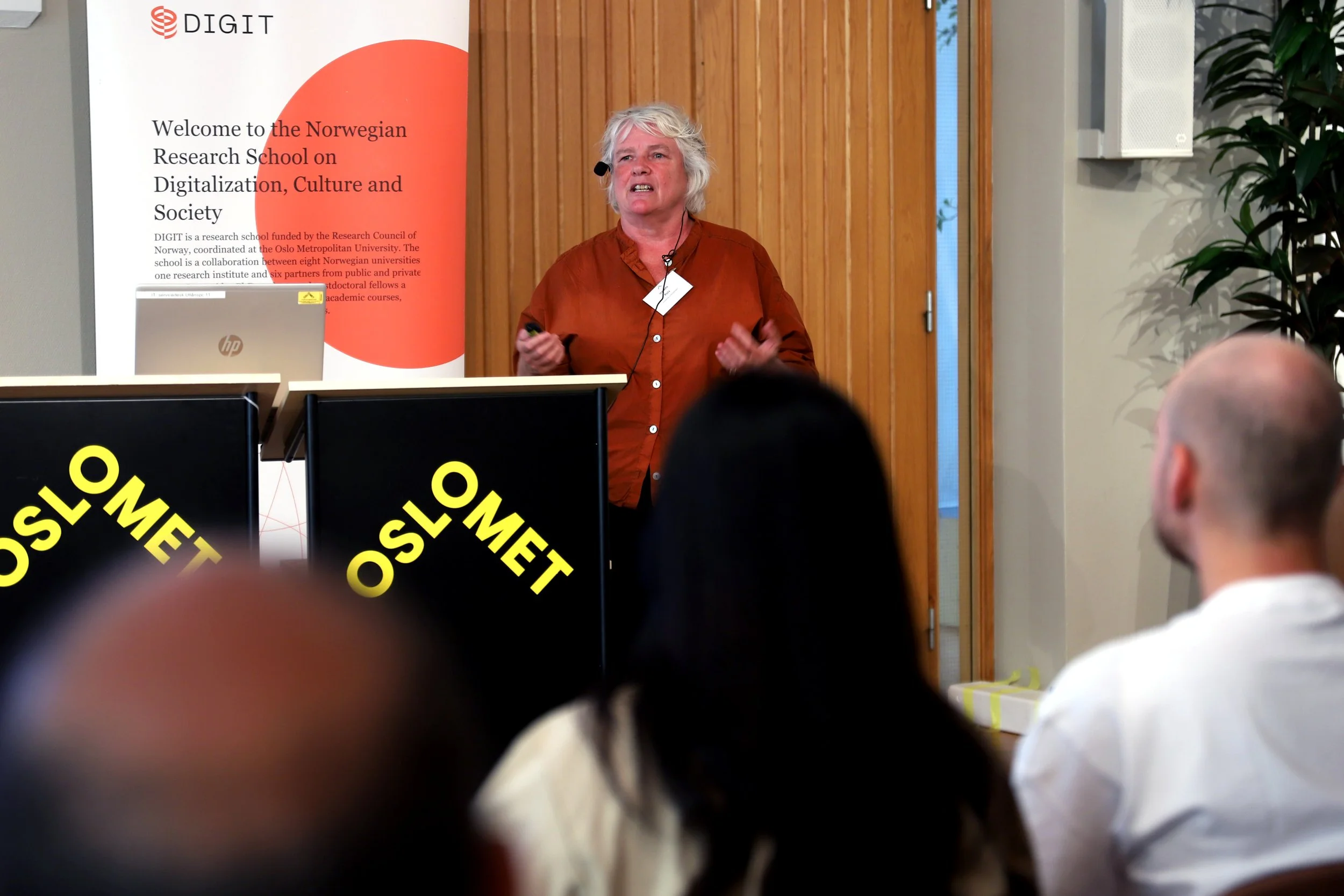
Professor Jeanette Pols of the University of Amsterdam emphasized that aesthetics, and how well technology fits into everyday life, can strongly influence whether people experience it as useful and beneficial. Photo: Kristine Welde Tranås / OsloMet
In August The DIGIT conference "Digital Pasts, Presents, and Futures: Human Consequences" brought together researchers, industry representatives, and public sector leaders to discuss how digitalization and artificial intelligence are shaping people, organizations, and society.
This article was originally published on the OsloMet website and is republished here with permission.
Through keynote lectures and panel discussions, participants from Norway, Germany, Japan, India, Poland, and the United Kingdom explored the consequences of digitalization and the ways technology and society continually shape one another.
Bringing Academia Together
The conference is part of the work of the Norwegian Research School for Digitalization, Culture and Society (DIGIT), which brings together researchers from across Norway to study the consequences of digitalization.
“Both DIGIT and this conference have been a unifying experience within academia, bringing together people from many institutions. PhD candidates, postdoctoral researchers, and professors all contribute side by side,” says Tina Svingerud, administrative coordinator of DIGIT.
Haldar points out that academia is often organized around competition.
“We compete for research funding, projects, and positions. That is why it is so valuable to experience a research school where people actually collaborate. I believe this is one of the best initiatives supported by the Research Council: a long-term project that genuinely brings academia together over many years.”
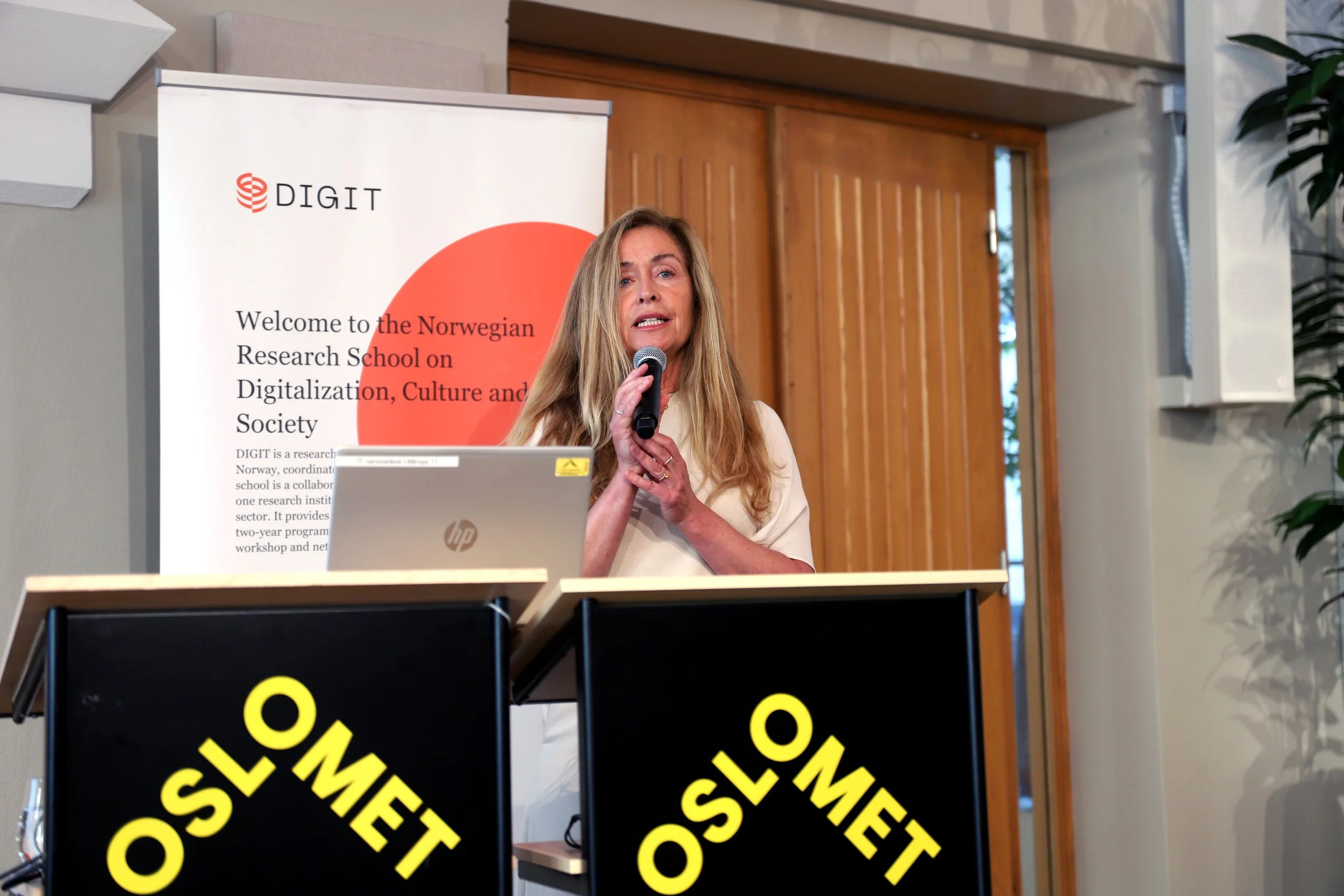
Professor Marit Haldar opened and chaired the conference. Photo: Kristine Welde Tranås / OsloMet
Challenging but important collaboration
According to Haldar, one of the major challenges is connecting academic knowledge more closely with society.
“Norway invests significant resources in research education, but we are not always equally good at making use of that expertise outside universities. We need to break down the silos and talk to one another.”
For that reason, DIGIT works closely with both public agencies and private companies.
“The conference highlighted the different cultures and frameworks within which academia, the public sector, and private industry operate,” says Svingerud.
“They have different perspectives, goals, and expectations. That makes collaboration challenging, but also essential.”
Norway invests significant resources in research education, but we are not always equally good at making use of that expertise outside universities. We need to break down the silos and talk to one another
“We need to think together”
Haldar believes the conference demonstrates that meaningful bridges can be built between sectors.
“Senior leaders from both business and the public sector took the time to listen. Several speakers were honest about what is not working and what remains difficult, not just about success stories. I found that very valuable.”
She says DIGIT is now seeing the results of years of relationship-building.
“Relationships take time to build. Perhaps that is the most important lesson from this conference: if we are to understand and address the major consequences of digitalization and artificial intelligence, academia, the public sector, and industry must actually spend time thinking together.”
Relationships take time to build. Perhaps that is the most important lesson from this conference: if we are to understand and address the major consequences of digitalization and artificial intelligence, academia, the public sector, and industry must actually spend time thinking together
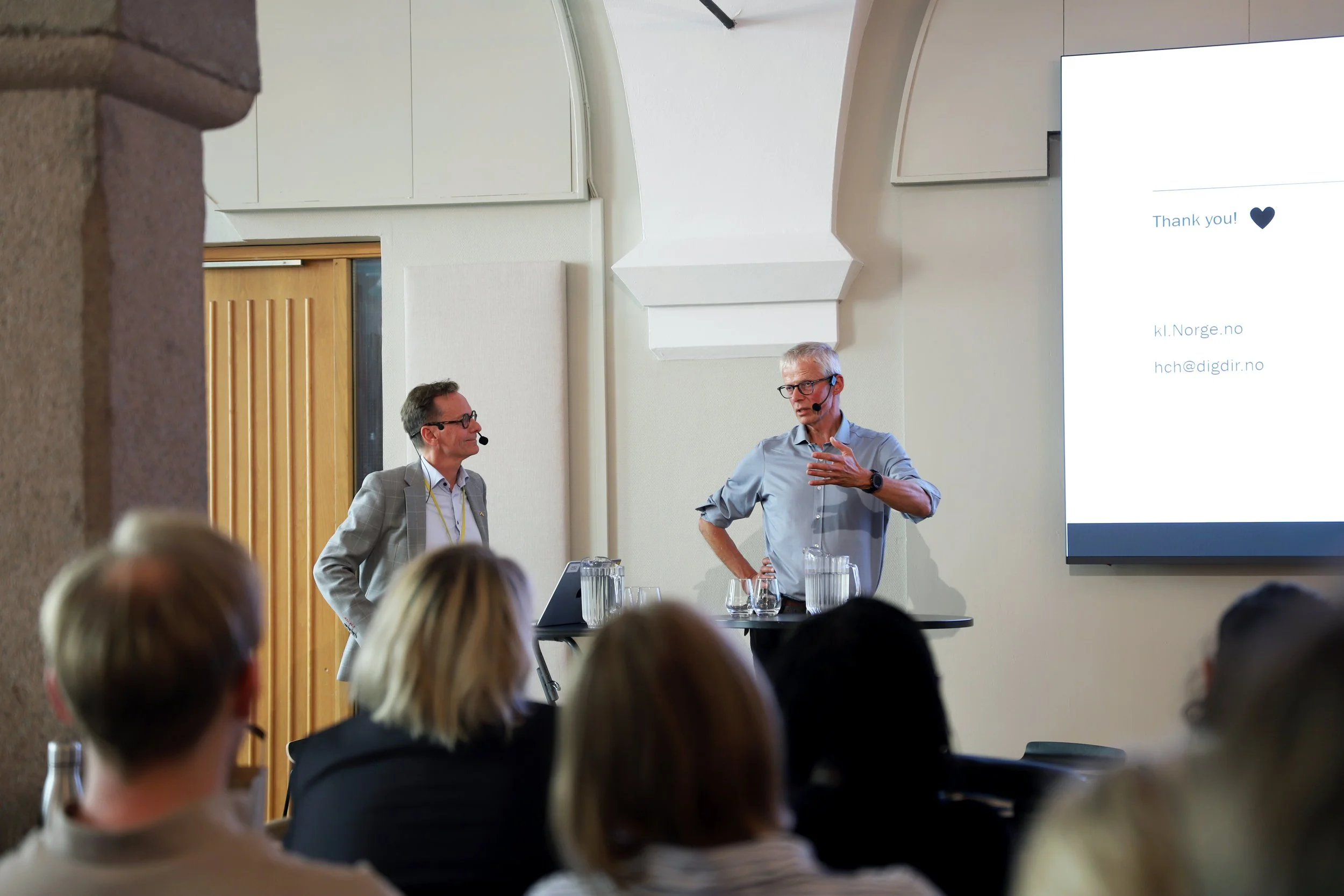
Rector at OsloMet, Christen Krogh and Director of AI Norway, Hans Christian Holthe. Photo: Kristine Welde Tranås / OsloMet
Research and social change
Topics discussed at the conference included how artificial intelligence is changing the way music is created and experienced, the role of aesthetics in determining whether technologies are perceived as beneficial, and how AI is challenging established ideas about education and learning.
Entrepreneurs developing digital solutions for schools, healthcare, and welfare services also described the difficulties of implementing innovations across municipalities, sectors, and different levels of government.
One of the keynote speakers was Hans Christian Holte, Director of KI Norge (AI Norway) and former Director of Nav. Holte described how the digitalization of Norway’s public sector has evolved over the past three decades, and how artificial intelligence is driving a new phase of rapid societal transformation that brings new challenges related to leadership, regulation, and coordination.
Enthusiasm and skepticism toward AI
DIGIT officially launched on 30 November 2022, the same week that ChatGPT became publicly available.
“At that point, very few people had any real relationship with artificial intelligence. In our original application to become a research school, AI was mentioned only once,” Haldar explains.
At this year’s conference, artificial intelligence was a recurring theme in almost every discussion.
“Everyone has a relationship with AI now and uses it in one way or another. At the same time, we see a strong tension between enthusiasm and skepticism, also within academia,” says Haldar.
“No one fully understands the consequences of artificial intelligence yet. That is why we need leaders who can provide direction and create confidence without pretending to have all the answers.”
No one fully understands the consequences of artificial intelligence yet. That is why we need leaders who can provide direction and create confidence without pretending to have all the answers