
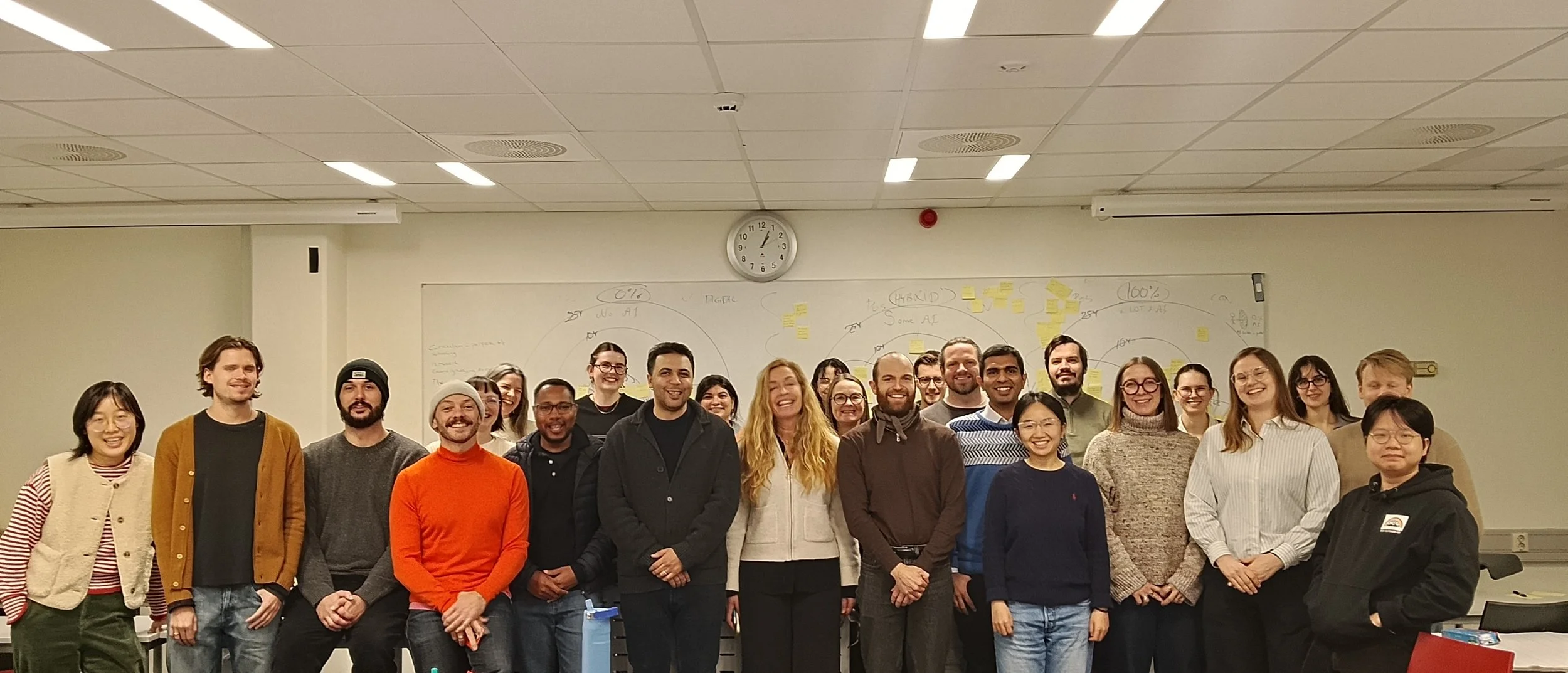
From 24 to 27 November, around 26 to 30 new PhD candidates and postdoctoral researchers from across Norway met in Oslo for the DIGIT kick-off course. Four days of theory, discussion and visits marked the start of their two years with the research school.
Introduction
Professor Marit Haldar and Million Tesfaye Eshete opened the course at OsloMet. Professor Erik Børve Rasmussen (OsloMet) gave a critical perspective on AI and human knowledge. Professor Roger Søraa (NTNU) introduced digitalization as a concept participants can use in their own research. In groups, the new members presented their projects to each other.
Theory
The second day gave participants a set of analytical tools. Professor Heidrun Åm (NTNU) introduced a sociotechnical understanding of technology, and Roger Søraa presented domestication theory. Marit Haldar showed how script analysis shed light on loneliness and digital communication. Dr Petter Falk (Karlstad University and Södertörn University) used assemblage theory to analyse the datafication of Swedish public care. Professor Kjetil Rommetveit (University of Bergen) introduced sociotechnical imaginaries, and Nis Johannesen, Head of Digital Innovation at Helse Sør-Øst, showed how STS and feminist perspectives can inform professional practice. The day ended with participants looking at their own research through the day's concepts.
Culture and collaboration
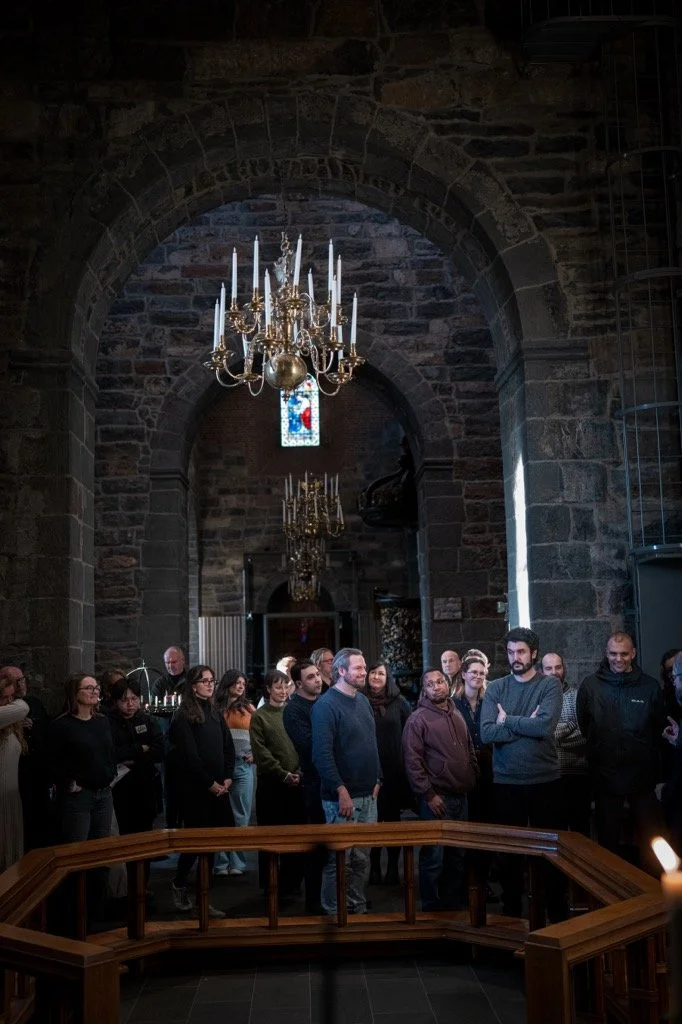
On Thursday, the course left the lecture hall. At Lillestrøm library, Tora Elise Brunvatne asked whether librarians have the skills to guide people towards reliable information in a digital landscape. At Gamle Aker kirke, Oslo's oldest building, priest Dr Roger Jensen reflected on what is lost and what is kept as more of life moves online, and why physical meeting places still matter. Carl Størmer and the musicians of Jazzcode followed with an interactive performance on improvisation, creativity and collaboration in academic work. The day ended with dinner and networking.
Work life
On the final day, Marit Haldar led a scenario workshop, where participants explored solutions to challenges set by a non-academic partner.
Next steps
Participants who complete the course assignment, a 750-word popular science text about their project with a reading list of about 500 pages, receive a course diploma recommending 3 ECTS.
DIGIT thanks all speakers, hosts and partners who made the week possible, and warmly welcomes its new members.
DIGIT is funded by the Research Council of Norway.