DIGIT kick-off course on Digitalization, Culture and Society
Welcome to DIGIT's kick-off course on Digitalization, Culture, and Society from November 25 - 28 at OsloMet!
DIGIT kick-off course: Digitalization, Culture and Society
When: November 25 - 28, 2025
Where: OsloMet, Pilestredet 42, Oslo
Language: English
The course is open only for new members of DIGIT (class of 2025-2027)
Registration: https://nettskjema.no/a/537084
Content
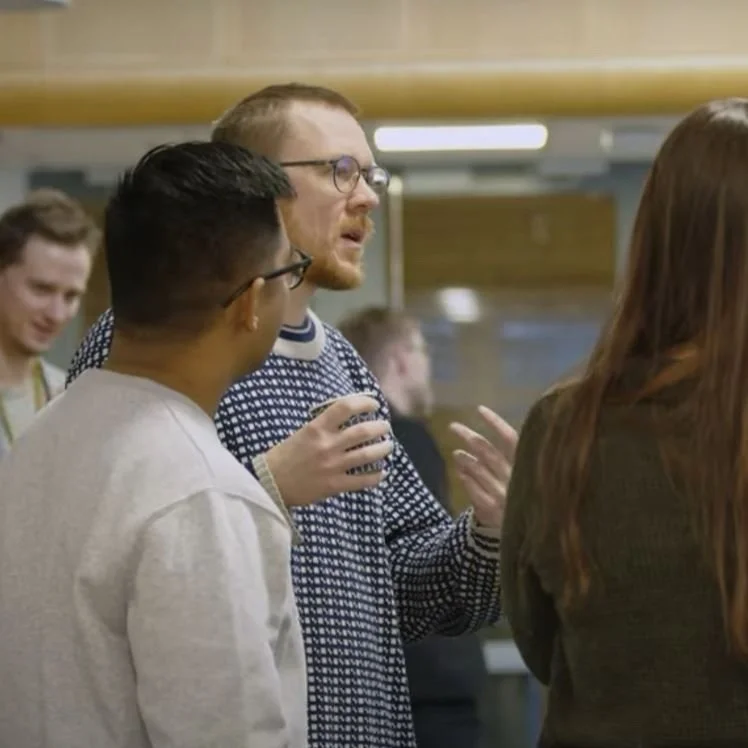
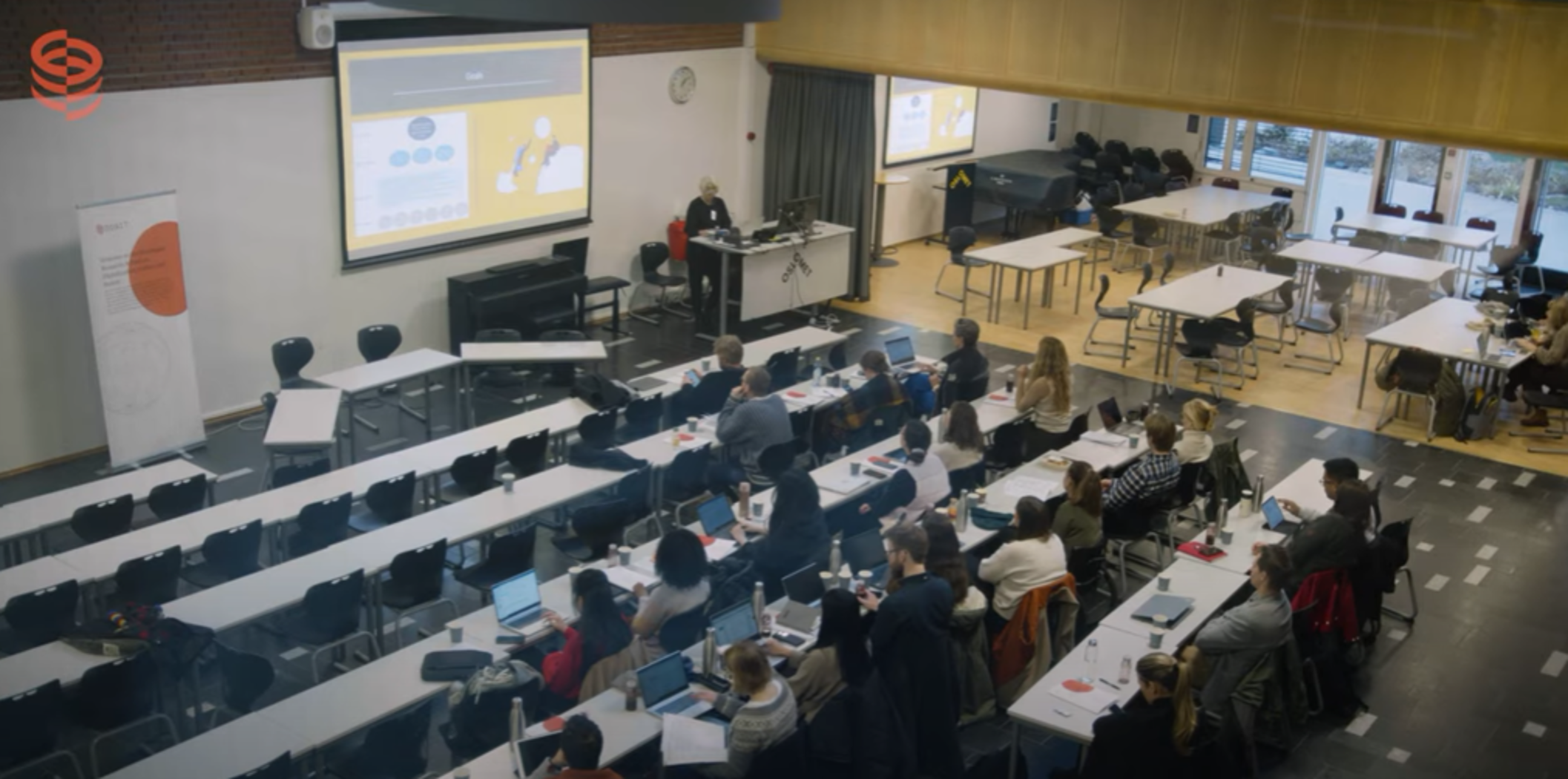
Each new DIGIT class begins with Kick-off course on Digitalization, Culture, and Society. Spanning four days, this course serves as an orientation for the incoming participants of the research school, allowing them to familiarize themselves with both their peers and the DIGIT partners.
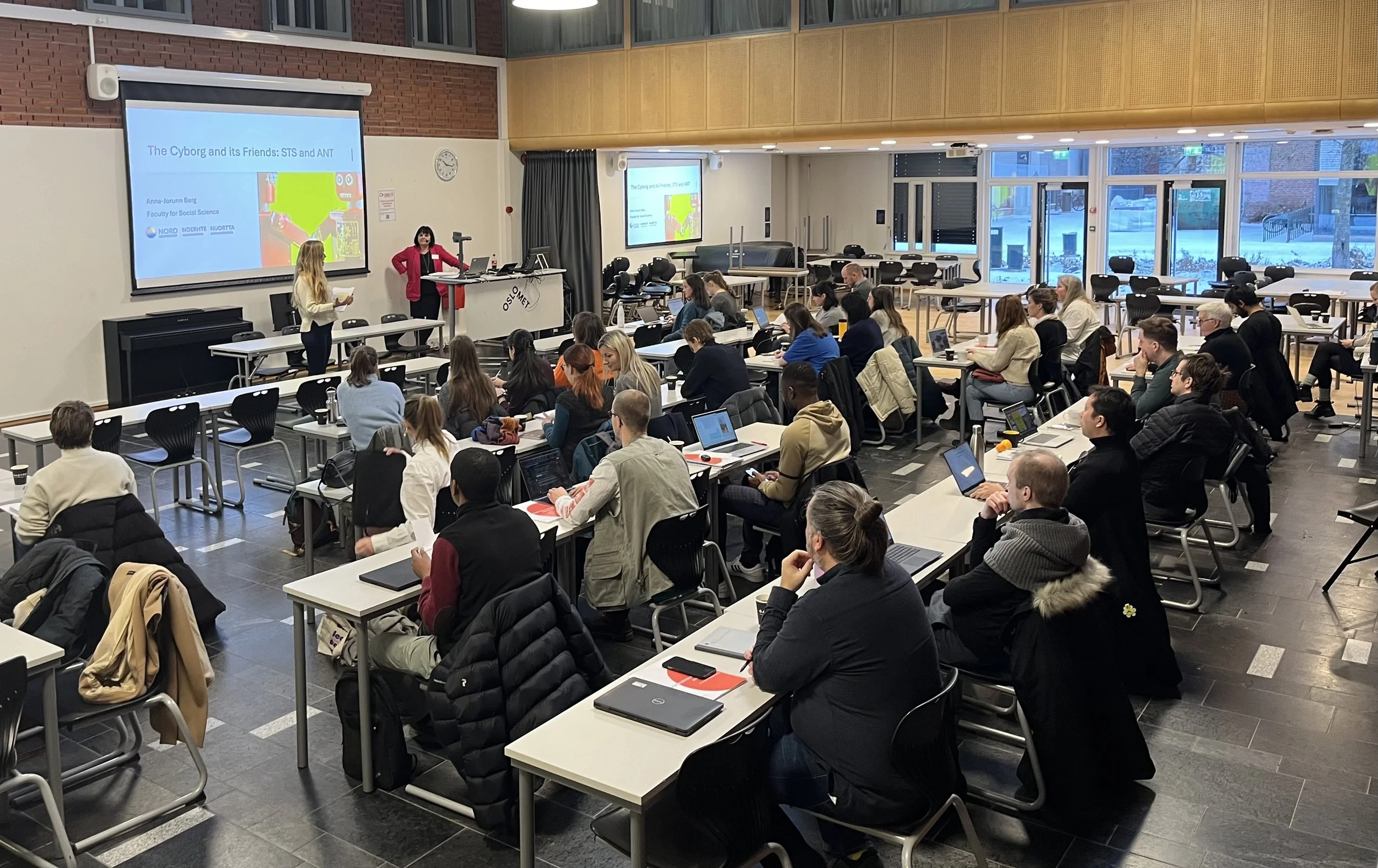
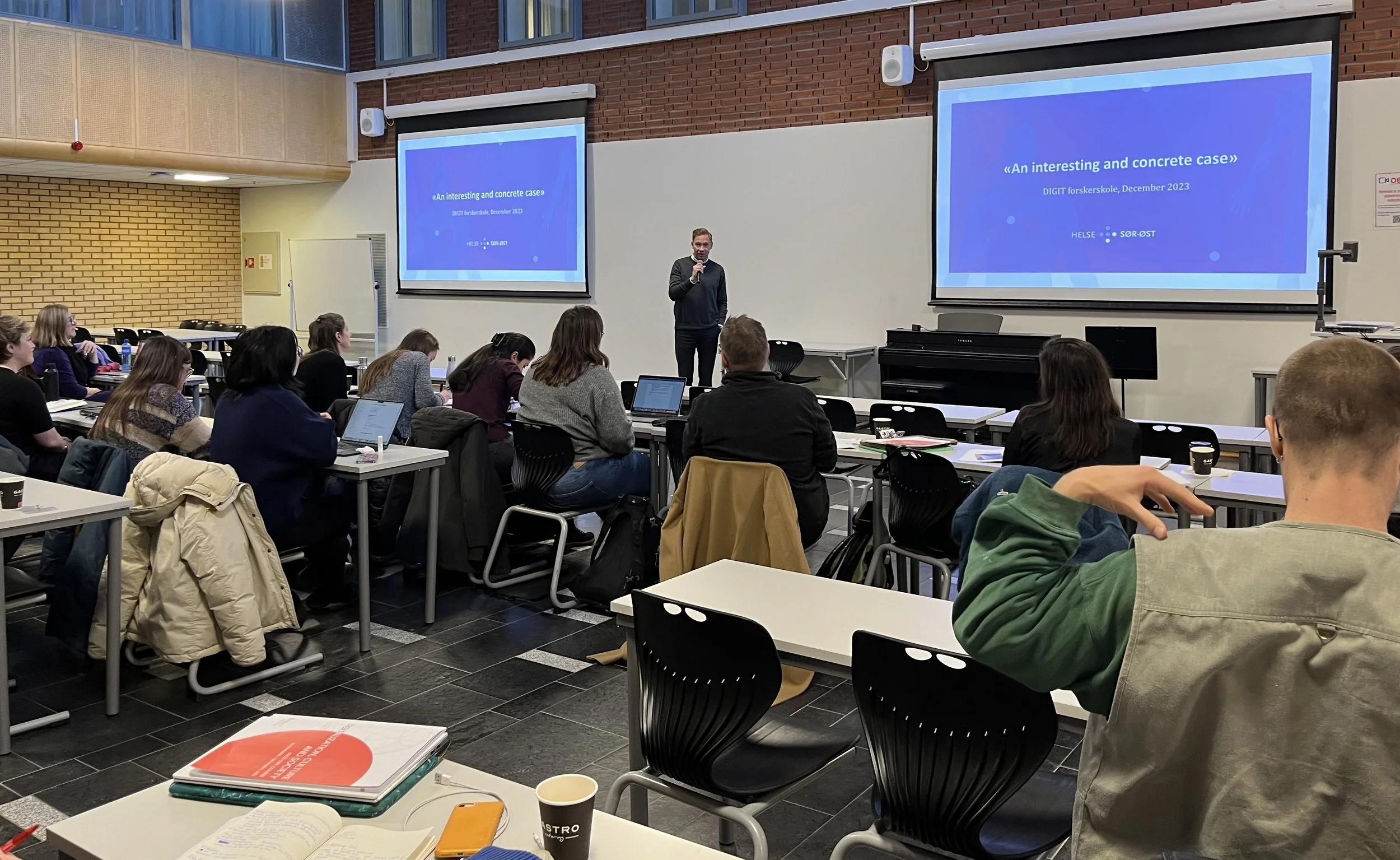
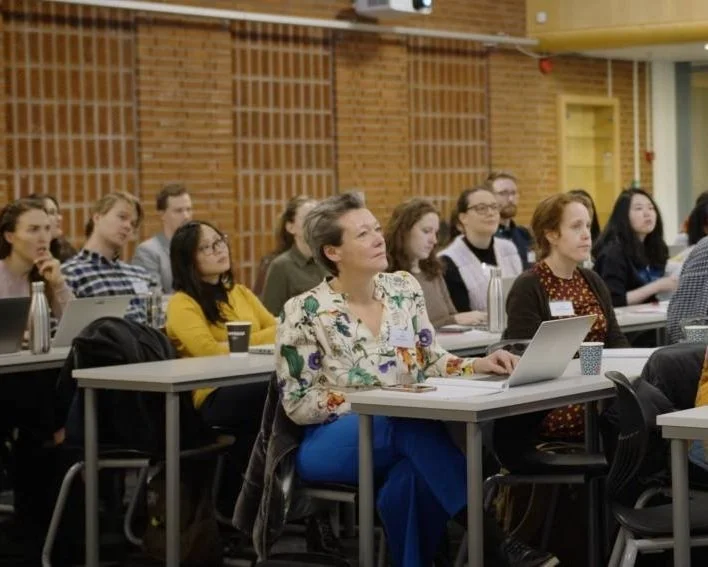
The course features lectures by academic partners, along with contributions from representatives from both the public and private sectors. Group discussions and presentations are also key elements of the course.
Kick-off catalogue
See the program and meet the participants and contributors of the DIGIT kick-off 2025 here: link to pdf (updated 26 Nov)
Travel and accommodation
For DIGIT participants residing outside Oslo, we will cover travel expenses (up to 2800 NOK). You are responsible for booking your own flight/train tickets in accordance with your university's guidelines and the Personnel Handbook for State Employees. DIGIT will book and cover hotel costs for those travelling in to Oslo (24-28 Nov).
Programme (updated November 6)
The programme may be subject to minor changes. You can download a PDF here: link.
Tuesday, 25 November 2025 - INTRODUCTION
Location: Q1015, Mosse Jørgensens klasserom, Pilestredet 42 - Anna Sethnes hus, OsloMet
09:30–09:45 Welcome and Introduction to DIGIT Research School
By Professor Marit Haldar and Tina Svingerud, OsloMet
09:45–10:45 Digitalization – How to Understand and Use It as Concept(s) in Your Research Project
By Professor Roger Søraa, NTNU
10:45–11:00 Break
11:00–11:30 Group Discussion: Digitalization - How to Understand and Use It as Concept(s) in Your Research Project
Facilitated by Professor Roger Søraa, NTNU
11:30–12:30 Lunch (included)
12:30–13:30 Presentation of PhD and Postdoctoral Projects in Groups
13:30–13:45 Break
13:45–14:30 What Is Machine Culture? AI's Impact on Culture and Society
By Professor Petter Brandtzæg, UiO
14:30–14:45 Break
14:45–15:45 Presentation of PhD and Postdoctoral Projects in Groups
Wednesday, 26 November 2025 -THEORY
Location: Q1015, Mosse Jørgensens klasserom, Pilestredet 42 - Anna Sethnes hus, OsloMet
09:00–09:45 Welcome and Introduction to a Sociotechnical Understanding of Technology
By Professor Heidrun Åm, NTNU
09:45–10:00 Break
10:00–10:45 Domestication Theory as a Useful Analytical Lens for Studying the Use of Digital Technologies in Practice
By Professor Roger Søraa, NTNU
10:45–11:00 Break
11:00–11:25 Introduction to Sociotechnical Imaginaries and the Sociology of Expectations
By Professor Heidrun Åm, NTNU
11:25–11:45 Tracing Big Data and AI Imaginaries
By Dr. Gernot Rieder, UiB
11:45–12:45 Lunch (included)
12:45–13:05 How Script Analysis Helped Us Shed Light on the Relationship Between Loneliness and Digital Communication
By Professor Marit Haldar, OsloMet
13:05–13:30 The Assemblage Concept and How It Helped Me Analyze the Datafication of Swedish Public Care
By Dr. Petter Falk, University of Karlstad and University of Södertörn
13:30–14:45 Group Discussion: What Happens If I Look at My Own Research Through These Concepts?
14:45–15:00 Break
15:00–16:30 Presentation of PhD and Postdoctoral Projects in Groups
Thursday, 27 November 2026 - TECHNOLOGY, INNOVATION AND ANALYSIS
Location: Norwegian Museum of Science and Technology, Kjelsåsveien 143, 0491 Oslo Room: Verdensrommet
09:20 Meet outside Radisson Blu Scandinavia Hotel for bus to technical museum. Holbergs gate 30, Oslo. Bus leaves at 9:30
10:00–12:00 Guided Tour at the Museum – I/0: The Telecommunications and Data Exhibition
By curator and PhD student Dag Andreassen, the Norwegian Museum of Science and Technology and NTNU
We will explore information and communication technology (ICT) through the history of telecommunications and computers. This museum experience bridges the past and the present, with insights into the future.
12:00–13:00 Lunch (included)
13:00–14:00 How to Navigate as a Tech Entrepreneur in Norway
By Karen Dolva, co-founder and former CEO of No Isolation AS
14:15 Bus leaves for Radisson Blu Scandinavia Hotel.
16:30 Dinner at Litteraturhuset (included)
Location: Wergelandsveien 29, Oslo
18:30–20:00 A live scenario analysis at Litteraturhuset: KI, power and democracy.
Open to the public. Language: Norwegian
With Fredrik Gulowsen, founder and CEO at NYBY, Hilde Nagell, advisor at the think tank Agenda, Jens Nørve, department director at the Norwegian digitalization agency (Digdir) and Sondre Engebråten, tech lead at Origo, Oslo Municipality. Moderator: Torjus Eckhoff, PhD research fellow at the TIK center at UiO and DIGIT alumnus.
Friday, 28 November 2025 - WORK LIFE
Location: Stensberggata 26 – Room X158
09:00–09:30 Introduction from the Norwegian Digitalisation Agency
By Jens Nørve, DigDir
09:30–09:45 Break
09:45–14:30 Scenario Workshop
By Professor Alexander Ruser, UiA and Marit Haldar, OsloMet
We will explore and envision future scenarios and solutions to challenges identified by a non-academic partner.
(Lunch is included in the program.)
14:30–15:00 Concluding Comments and Evaluation of the Week


Course assignment (optional)
To receive a course diploma, participants are required submit a 750-word popular science text about their doctoral project/research project. A self-selected reading list of approximately 500 pages needs to be included. Participants will receive feedback on their written assignments from a communication specialist.
This text should be aimed at a broader audience, such as policymakers, practitioners from relevant sectors, and/or the general public. Be sure to define who the target audience is.
The goal is to make your research accessible and relevant. By communicating your research topic or findings clearly and effectively, you can contribute to informed discussions and raise awareness about the importance of your research. We hope to publish some of the assignments on our homepage (with your permission).
In addition to this, all students will deliver a short presentation of their research in groups of 6-7 individuals over the course of the four days.
Note on the popular science text: DIGIT is a research school of quality and relevance, and one of our goals is to improve collaboration between academia and other social actors through researcher training. To link the research to the broader society and demonstrate its relevance to the non-academic sector is thus one of the key pillars of our programme.
You can submit the text here: https://nettskjema.no/a/554261.
Diploma
Successful completion of the course assignment and the group presentation, along with a minimum of 80% attendance, will earn participants a diploma specifying the total workload:
Participation in 4 full course days
Attendance in the group presentation of their own research project
Submission of a final assignment comprising 750 words
Self-selected reading list totaling 500 pages.
Participants can utilize this diploma to apply for credit approval at their respective institutions. The diploma will recommend 3 ECTS. It is important to note that the participant's institution will determine if and how many credits awarded.

Course leader - Marit Haldar
Marit Haldar is a professor of sociology at OsloMet and the director of the DIGIT research school and the Center for Digitalization of Public Services and Citizenship (CEDIC).
Throughout her research-career she has been concerned with ideology and cultural analysis of childhood, old age, gender, family and (social) technology. She has also studied marginalized subjects in the welfare state and inequalities in treatment in the health care system from an ideological perspective.
Feel free to contact the DIGIT coordinator should you have any practical questions.