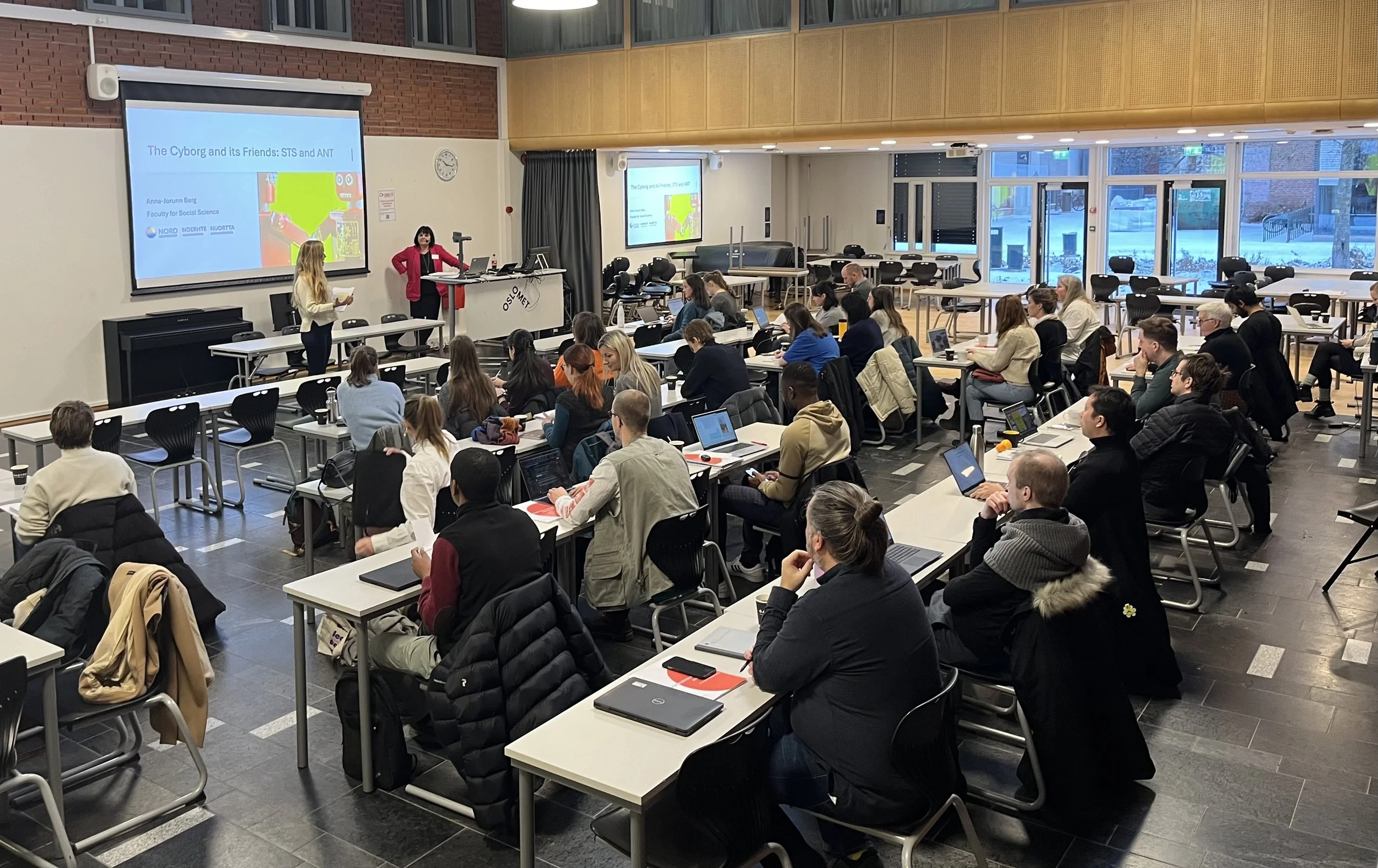
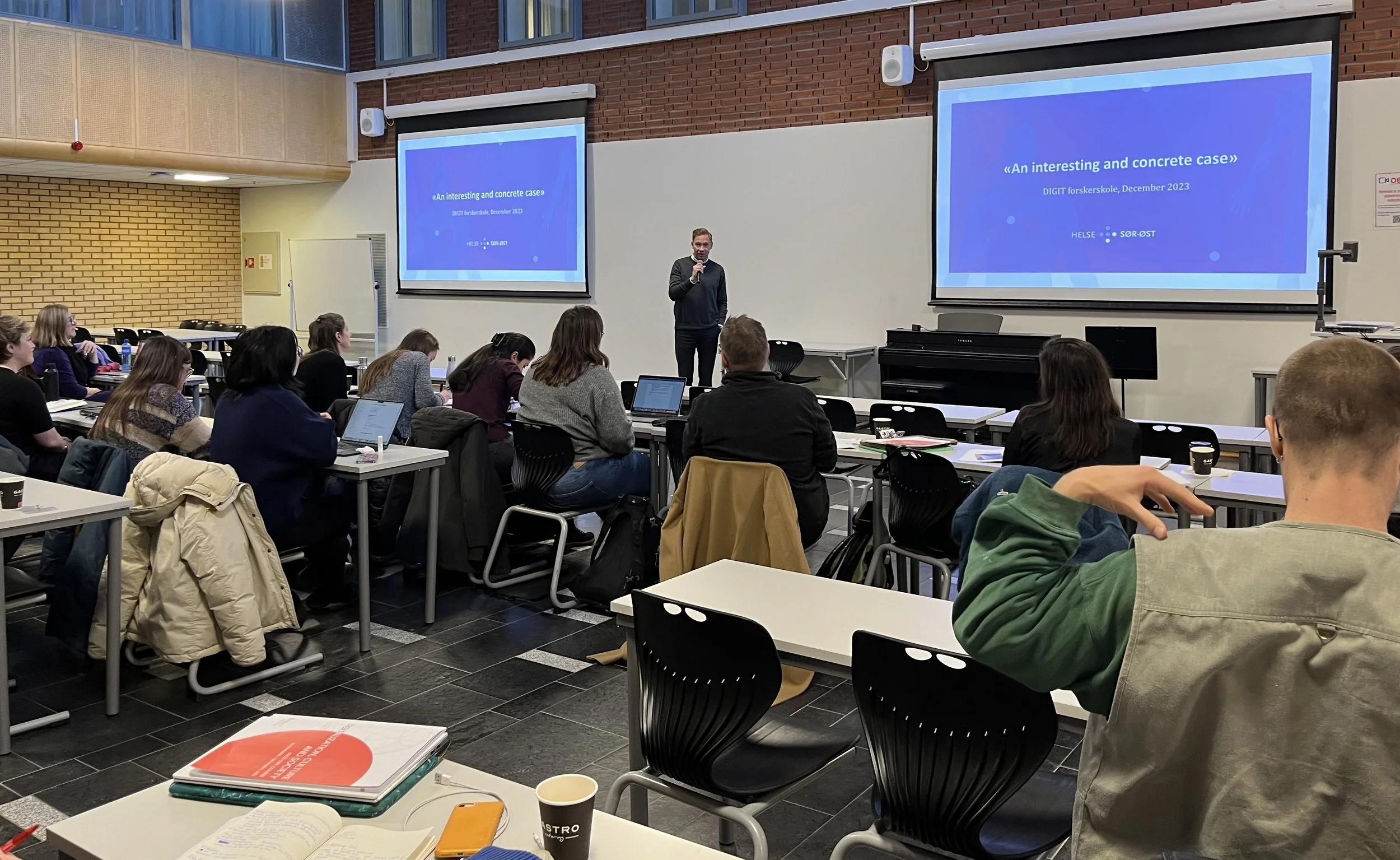
DIGIT kick-off course on Digitalization, Culture and Society
Digitalization, Culture, and Society is a PhD-level course within the Norwegian Research School on Digitalization, Culture and Society (DIGIT). The course examines how digitalization reshapes societal structures, and how these structures actively constitute what “the digital” is and what it can become.

DIGIT kick-off course: Digitalization, Culture and Society
When: November 24 - 27, 2026
Where: Oslo
Language: English
The course is open only for new members of DIGIT (class of 2026-2028)
Registration: https://nettskjema.no/a/631202
Content
Digitalization, Culture, and Society is a PhD-level course within the Norwegian Research School on Digitalization, Culture and Society (DIGIT). The course examines how digitalization reshapes societal structures, and how these structures actively constitute what “the digital” is and what it can become.
Rather than treating digitalization as an external technological force, the course approaches it dialectically: digital infrastructures are understood as socially produced, culturally mediated, and institutionally embedded. In this perspective, digital technologies both transform and are transformed by normative orders, power relations, and material arrangements.
Delivered as a four-day intensive course, it introduces key theoretical perspectives such as sociotechnical imaginaries, domestication theory, script analysis, and assemblage thinking as analytical tools for understanding digitalization as historically situated and conceptually contested.
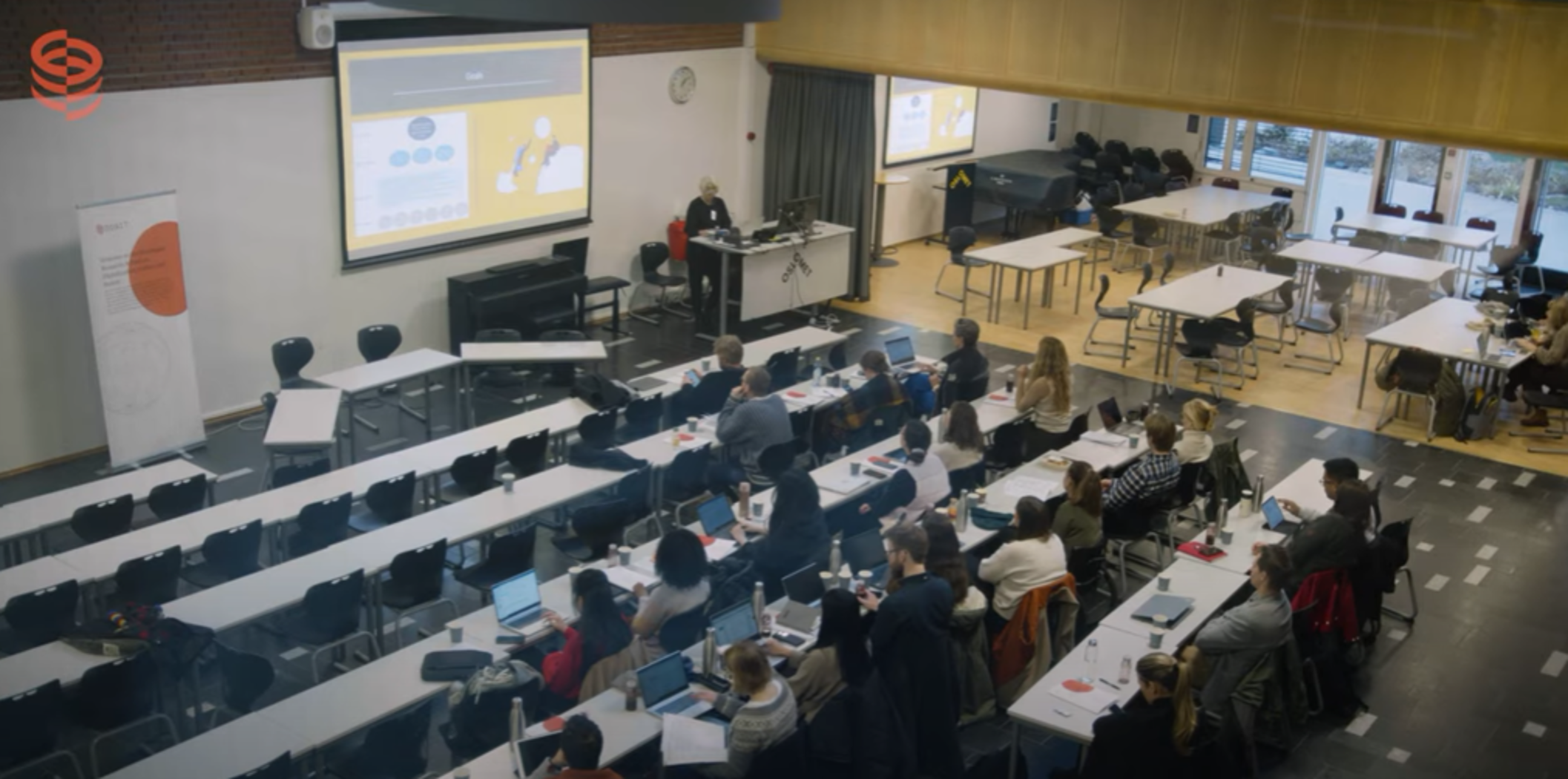
Participants engage in digitalization as a multidimensional process that raises methodological questions and has broad societal implications. Through lectures, discussions, participant presentations, and a scenario workshop on public sector digitalization, the course fosters interdisciplinary reflection. A central aim is to strengthen participants’ ability to situate their doctoral research within wider academic and societal debates and to communicate it in analytical and publicly relevant ways.
A more detailed programme will be available soon. See last years programme here for what to expect: https://www.digitresearchschool.no/events/event-kick-off-2025
Travel and accommodation
For DIGIT participants residing outside Oslo, we will cover travel expenses (up to 2800 NOK). You are responsible for booking your own flight/train tickets in accordance with your university's guidelines and the Personnel Handbook for State Employees. DIGIT will book and cover hotel costs for those travelling in to Oslo (24-27 Nov).
If you are unable to travel on the morning of 24 November and arrive in time for the programme start at 10:00, please contact the DIGIT coordinator.


Course assignment (optional)
To receive a course diploma, participants are required submit a 750-word popular science text about their doctoral project/research project. A self-selected reading list of approximately 500 pages needs to be included. Participants will receive feedback on their written assignments from a communication specialist.
This text should be aimed at a broader audience, such as policymakers, practitioners from relevant sectors, and/or the general public. Be sure to define who the target audience is.
The goal is to make your research accessible and relevant. By communicating your research topic or findings clearly and effectively, you can contribute to informed discussions and raise awareness about the importance of your research. We hope to publish some of the assignments on our homepage (with your permission).
In addition to this, all students will deliver a short presentation of their research in groups of 6-7 individuals over the course of the four days.
Note on the popular science text: DIGIT is a research school of quality and relevance, and one of our goals is to improve collaboration between academia and other social actors through researcher training. To link the research to the broader society and demonstrate its relevance to the non-academic sector is thus one of the key pillars of our programme.
Diploma
Successful completion of the course assignment and the group presentation, along with a minimum of 80% attendance, will earn participants a diploma specifying the total workload:
Participation in 4 full course days
Attendance in the group presentation of their own research project
Submission of a final assignment comprising 750 words
Self-selected reading list totaling 500 pages.
Participants can utilize this diploma to apply for credit approval at their respective institutions. The diploma will recommend 3 ECTS. It is important to note that the participant's institution will determine if and how many credits awarded.

Course leader - Marit Haldar
Marit Haldar is a professor of sociology at OsloMet and the director of the DIGIT research school and the Center for Digitalization of Public Services and Citizenship (CEDIC).
Throughout her research-career she has been concerned with ideology and cultural analysis of childhood, old age, gender, family and (social) technology. She has also studied marginalized subjects in the welfare state and inequalities in treatment in the health care system from an ideological perspective.
Feel free to contact the DIGIT coordinator should you have any practical questions.