
DIGIT research school at KS’ eKommune conference
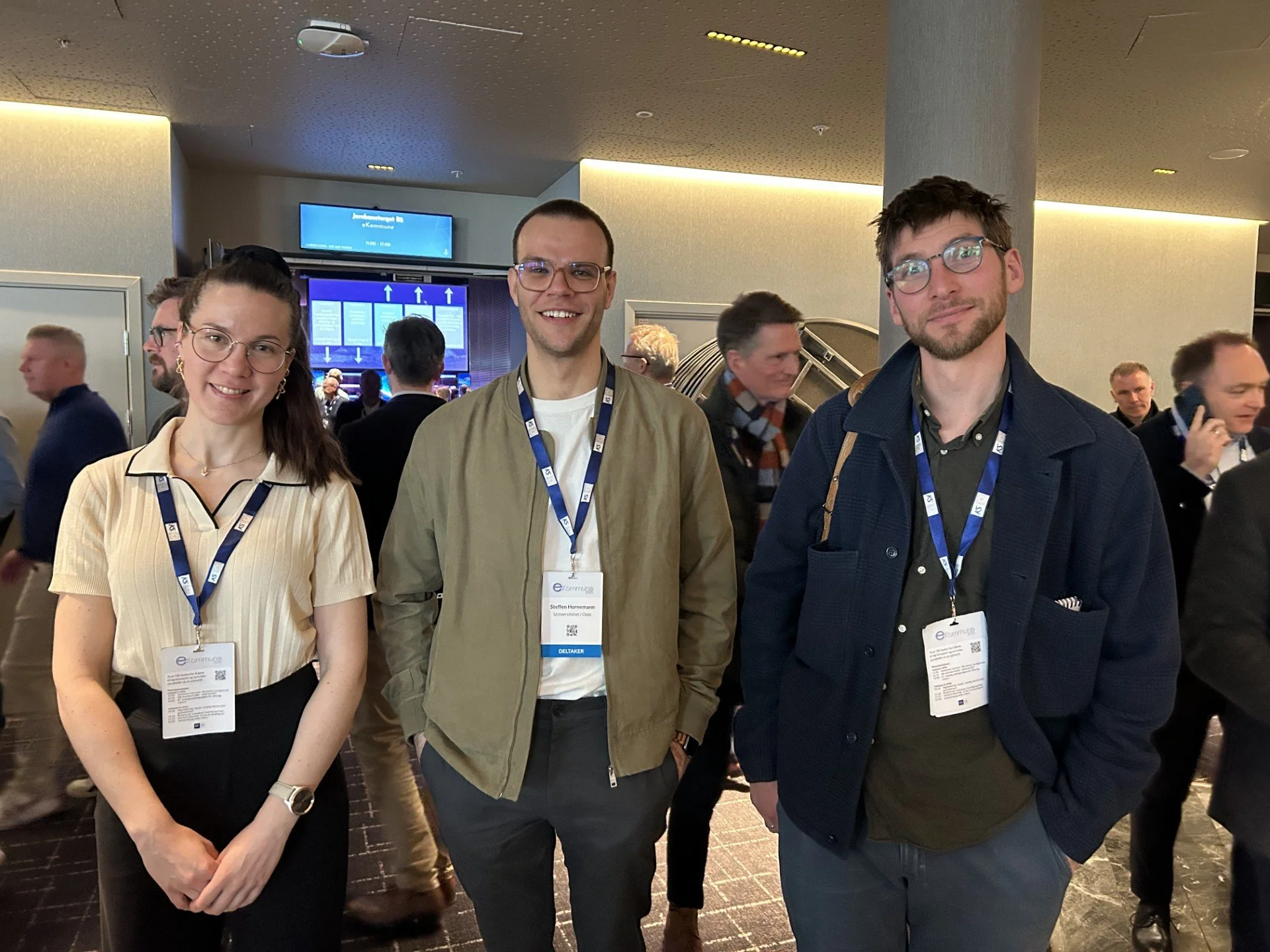
DIGIT members Eline Hovstad Raphaug, Steffen Hornemann and Erik Bussesund. Photo: DIGIT.
From 8–10 April 2025, DIGIT took part in the eKommune conference for the second time. The conference is Norway’s largest event for those working with or towards the digital transformation of the municipal sector, and this year’s theme focused on "weathering the storm" and being on the frontline in a digital age.
Many DIGIT researchers are engaged in projects exploring the digitalisation of public services, making this conference highly relevant for many of our members.
Below, you can read more about what two of our members took away from their participation.

“Attending eKommune 2025 was an incredibly valuable experience. As a researcher focused on public sector digitalization in my PhD project, practitioners’ conferences like these are an important arena for taking the pulse of what’s going on in the field”
-Steffen Hornemann -
Steffen Hornemann, PhD research fellow at the University of Oslo and DIGIT member. April 2025:
Attending eKommune 2025 was an incredibly valuable experience. As a researcher focused on public sector digitalization in my PhD project, practitioners’ conferences like these are an important arena for taking the pulse of what’s going on in the field. This year’s conference theme, “municipality in the storm,” probably resonated even more deeply than the organizers had imagined when setting it a year ago. Speakers extensively discussed how recent global developments and crises are playing out locally. So the conference didn’t only show how small places are implied in large issues, but also how complex digitalization in Norwegian municipalities is. While many speakers emphasized the importance of collaboration, it was also pointed out how diverse the group of involved parties is: from local developers to third-party vendors, national organizations such as the Norwegian Digitalisation Agency or the Norwegian Association of Local and Regional Authorities (KS), to intermunicipal IT organizations and digitalization networks.
This is why it also makes sense for research to approach digitalization in municipalities as a complex, distributed, and long-term endeavor that happens across different sites, scales, and actors. eKommune is just such a site making up digitalization efforts. Different actors get together to discuss their visions, coordinate their actions, and work on aligning different opinions. For me, it was an ideal way to learn more about how imaginaries about public sector digitalization are brought into being and generate activity.
But in addition, the conference was also insightful in terms of concrete practical examples of digitalization in municipalities. In various sessions, representatives presented specific projects, such as digitalizing the services of municipal aid stations that provide, for instance, wheelchairs and walking aids to citizens. My own PhD project takes a practice perspective and focuses on the implications of digitalization for how work is done and organized, and for professional identities and competence. So these practical examples were interesting cases to see how digitalization plays out on the ground and in workers’ everyday lives. Overall, eKommune was an invaluable opportunity to learn more about the current state of municipal digitalization, and how concrete projects relate to larger discourses connecting a variety of actors and sites.

“Since my research examines digitalization of municipal healthcare services, participating at eKommune was a great opportunity to meet people with hands-on experience with the challenges I’m trying to understand”
-Eline H. Raphaug -
Eline H. Raphaug, PhD research fellow at the Norwegian University of Science and Technology and DIGIT member. April 2025:
Since my research examines digitalization of municipal healthcare services, participating at eKommune was a great opportunity to meet people with hands-on experience with the challenges I’m trying to understand. In my PhD, I’m looking into how managers in healthcare are using digital data as support for their planning and decision-making processes. In several of the plenary sessions on the overarching theme for the conference, “Municipality in the storm - front line in a digital age”, the speakers reminded us of the importance of access to data if a crisis should happen, and that we never must forget citizens’ right to data privacy, even in times of crises. Interestingly, during my fieldwork in municipalities so far, some of my informants have also pointed to this.
Several other parts of the program were fruitful for me and my research, especially the ones about benefits management [gevinststyring]. There was both a workshop and a plenary session where municipalities presented cases on this topic. Benefits management is central in governance with municipal health data. However, in my fieldwork, I’m missing successful stories around this – all my informants talk highly about benefits management in theory, but they think it’s difficult in practice. At eKommune I was so lucky to get to observe this workshop, where a municipality presented how they successfully implemented this as part of a project, and got actual benefits in the end. The participants at this workshop eventually got the task of setting up a benefits profile with relevant indicators in their own municipality. In addition, I met with some of the key people that drove this project, and we scheduled interviews that will be part of my PhD. Attending eKommune has undoubtedly enriched my research on how municipalities can make better use of health data as part of their digital transformation.
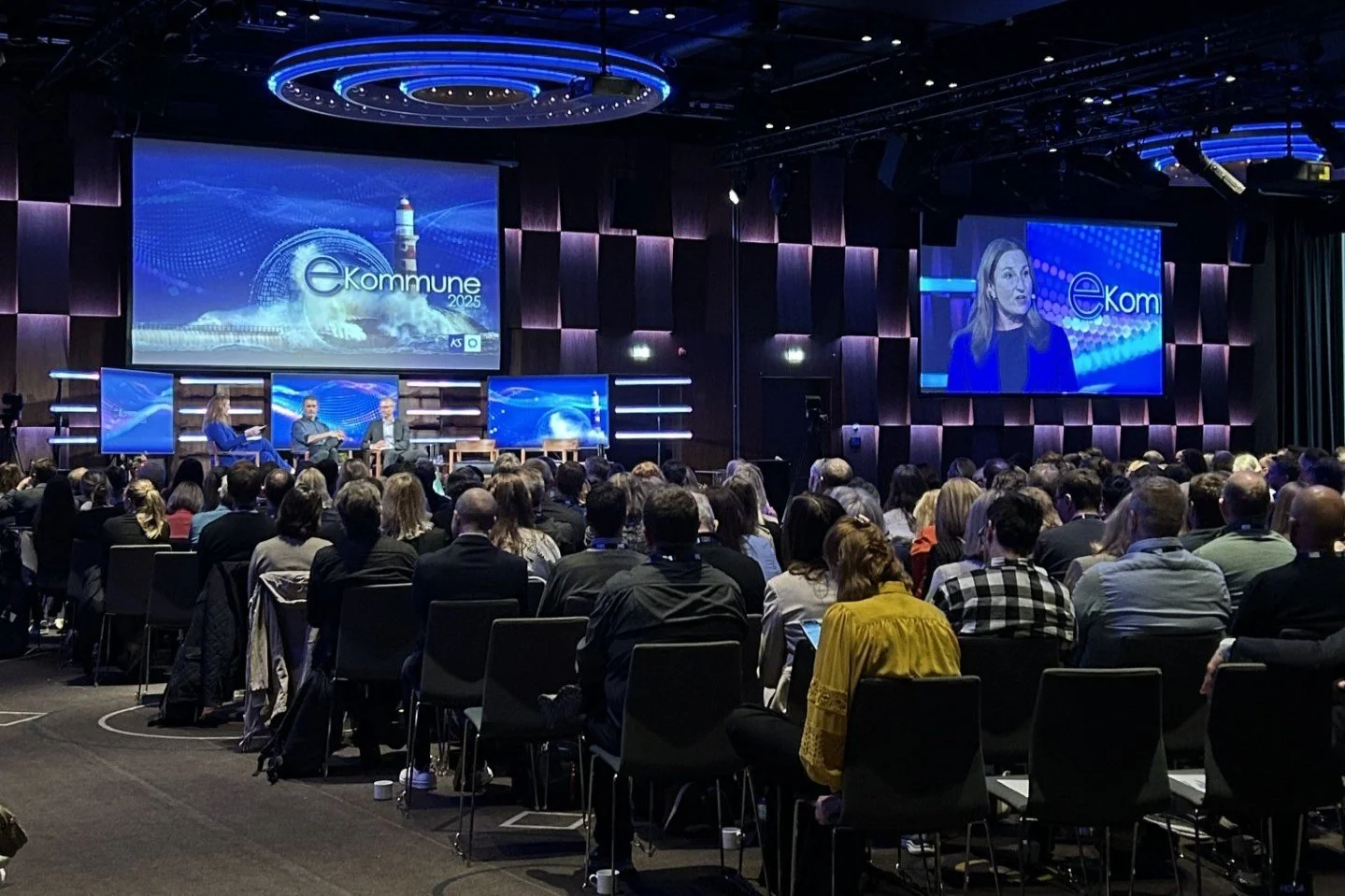
eKommune 2025. Photo: DIGIT.