
Activities
Meet us at inspirational events focused on digitalization, culture and society, presented by expert researchers and professionals from outside the research sector. This page provides an overview of the academic activities available to DIGIT-participants.
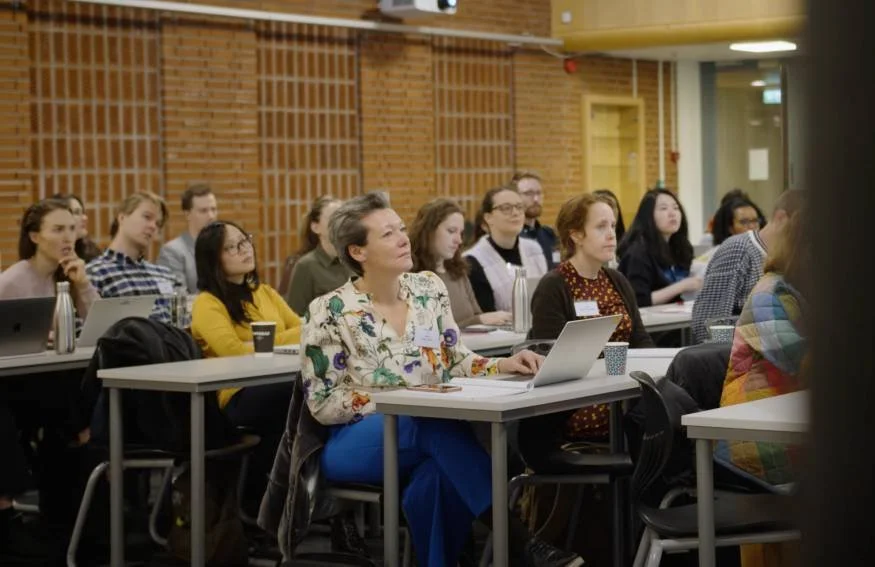
Kick off-course on Digitalization, Culture and Society for Class of 2023
Welcome to the DIGIT-kick off course for class of 2023! Members and partners meet for lectures, group discussions and presentations.

ME-638-1: Advanced Methods in social science research on digitalization
DIGIT course: Advanced Methods in social science research on digitalization” at the University of Agder.

CEDIC Talks webinar: Digitalization in disability organizations: legal, moral, and organizational challenges
Join the online guest lecture


DIGIT course on Rights and Freedoms in Digital Design
Welcome to the DIGIT "Rights and Freedoms in Digital Design" course, running from May 30-31 2023 at the University of Bergen.

Writing retreat with DIGIT
Writing retreat with DIGIT
Would you like to participate in a 3-day workshop dedicated to your academic writing? As a member of DIGIT, you are invited to join our very first writing retreat that will take place at the charming Jeløy Radio hotel in Moss. The idea is to come together in a quiet environment and focus entirely on our scientific writing. We will have time for both active writing and for peer-to-peer discussions in groups. Additionally, every participant will receive feedback on their paper from the course leaders.
Are you interested in joining the workshop? We only have 12 spots for this retreat, so please register ASAP to save your place!

Writing Retreat
at
Jeløy Radio Hotel
When: 17 - 19 April 2023
Registration deadline: 8 March 2023
Registration: https://nettskjema.no/a/305372 (Your place is not reserved until you here back from us)
Prerequisites: A paper draft (2000-4000 words) must be submitted in English or a Scandinavian language by 3 April at the latest. Please upload your draft paper draft here: https://nettskjema.no/a/305375
The writing retreat is open for DIGIT members only. All reasonable costs (economy travel and full board at the hotel) will be reimbursed.
Content
This is a workshop designed to give the participants a break away from daily commitments to get protected writing time and to focus on their individual writing.
The program is designed with allocated time slots for active writing where participants spend time on their individual draft paper. Since we have three days together, there will also be time for peer-to-peer feedback sessions and to receive feedback and guidance from the course leaders.
As a participant, you will be allocated writing partners in groups of three. You present your individual work to your fellow colleagues and to the course leaders, and additionally act as discussant of the work of the two other group members.
The aim is to create an inclusive and safe social group dynamic, where we discuss each other’s work and inspire each other with engaged, constructive and respectful feedback. Since the participants in the workshop will follow an all-day program, we require that participants join the complete program and put aside other commitments during the stay to protect the concentration and the time dedicated to our writing.
The workshop will be led by Marit Haldar and Hilde Reinertsen. Read more about their background below.
Preliminary program
Monday 17. April
13.00 – 14.00 Lunch
14.00 – 14:15 How to give constructive feedback
14.15 – 16.00 Group work with paper presentation, discussion and feedback
16.00 – 16.30: Snack break
15.30 – 19.30: Writing-session
19.30: Dinner
Tuesday 18. April
07.00 – 09.00: Breakfast
09.00 – 12.00: Writing-session
12.00 – 13.00: Lunch
13.00 – 17.00: Writing-session
17.00 – 17:30: Snack break
17:30 – 19.00: Walk and talk with writing partners
19.00 - Dinner
Wednesday 19. April
07.00 – 09.00: Breakfast
09.00 – 11.00: Writing-session
11.00 – 12.30: Feedback and evaluation
12.30 Snacks before departure

Course leader
Marit Haldar is professor of sociology at OsloMet and the director of DIGIT. Throughout her research-career she has been concerned with ideology and cultural analysis of childhood, old age, gender, family and (social) technology. She has also studied marginalized subjects in the welfare state and inequalities in treatment in the health care system from an ideological perspective. Haldar has broad and long experience with most qualitative methods and has developed new methods that are discussed in highly regarded international method literature (see Silverman, D. 2011, "Interpreting qualitative data", 4th ed. London: Sage). Haldar has led courses in qualitative methods and writing courses at least once a year since 2011. She has extensive experience in providing feedback on texts in both the humanities and social sciences.
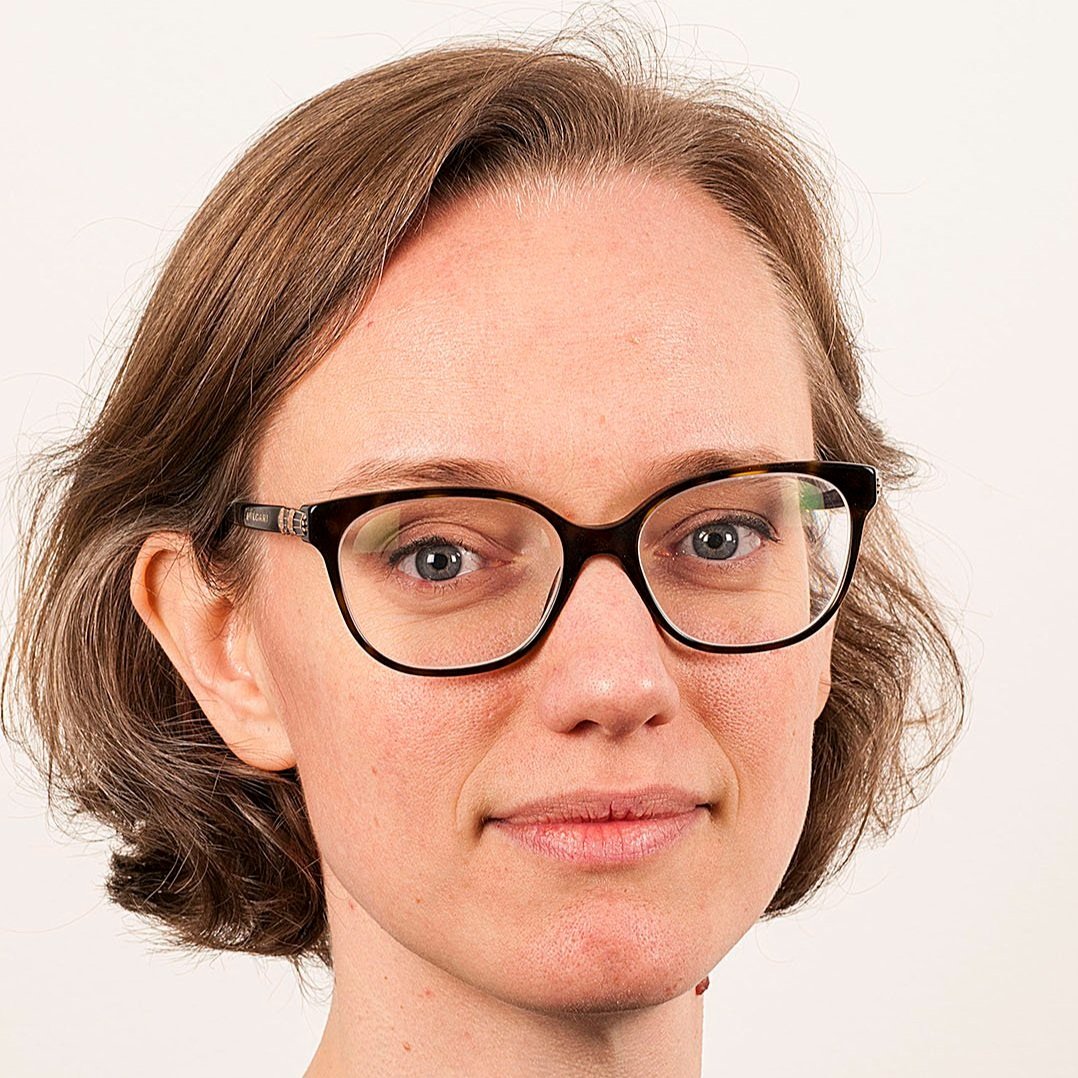
Course leader
Hilde Reinertsen is a researcher at the Centre for Technology, Innovation and Culture (TIK) at the University of Oslo.
Reinertsen’s academic interests span from the relationship between knowledge and politics, and how different forms of knowledge production shape politics and society at large. She has investigated topics within the history of politics and public administration, the history of science, environmental history, development studies, energy, aquaculture, petroleum, evaluation and audit. She is the principal investigator of the research project “Evaluation Optics of the Nation State: The Past, Present and Future of Public Documentation” (EVALUNATION). This project builds on her former Phd project on the history of evaluation reports and how these are written, read and discussed in society. A key part of the research project and Reinertsen’s previous work is to develop an interdisciplinary method for document analysis that combines historical, rhetorical, sociological and digital methods with approaches developed within the field of Science and Technology studies.
Reinertsen has co-written the textbook Doing document analysis: A practice oriented method (SAGE Publishing 2020) with Kristin Asdal, which is an expanded version of the Norwegian original: Hvordan gjøre dokumentanalyse: En praksis-orientert metode (Cappelen Damm 2020).
Please feel free to contact the DIGIT coordinator should you have any questions.
CEDIC Talks webinar: The Struggle for Web Accessibility by Persons with Disabilities in the US with Professor Peter Blanck
Join the online guest lecture with Dr. Peter Blanck from Syracuse University on disability law and policy in the US.

CEDIC Talks webinar: The digital welfare eco-system with Professor Jacqueline O'Reilly
Join the online guest lecture with Professor Jacqueline O’Reilly from the University of Sussex Business School.

CEDIC Talks: Technological change as social practice - the case of video consultations
Welcome to the second edition of CEDIC Talks this spring semester, where we invite national and international researchers to hold open guest lectures on social and political consequences of digitization.
The Research Centre for Digitalisation of Public Services and Citizenship (CEDIC) is the host institution for the research school DIGIT. CEDIC has a monthly lecture series called CEDIC Talks, where they aim to broaden our knowledge and awareness about ongoing research in Europe about digitalization processes and their social consequences.
The lectures are open, and both DIGIT members and others are welcome to participate.
This Thursday, Dr Gemma Hughes presents findings from her research on video consulting in the UK during the covid-19 pandemic. Hughes is Senior Researcher in the Interdisciplinary Research in Health Sciences Group at the Nuffield Department of Primary Care Health Science, University of Oxford. She brings practical experience and knowledge of health services to her interdisciplinary research, which focuses on critically analysing the relationships between health and social care policy, practice and lived experience.
Video consulting during the pandemic
Hughes has broad interests in how patients and the public interact with health and social care services and specific interests in how these interactions are shaped by the complexity of health and social care systems and technologies. In this talk, she will draw on research conducted during the pandemic to consider how adoption of technologies can be conceptualised as constituting social change. The talk is based on findings she presented, along with fellow researchers, in the recently published article "Theorising the shift to video consulting in the UK during the COVID-19 pandemic: Analysis of a mixed methods study using practice theory" (2022) in Social science & medicine.

CEDIC Talks: The future of work and welfare in the digital economy - new risk of poverty and social exclusion
Welcome the semester’s first edition of CEDIC Talks.
The Research Centre for Digitalisation of Public Services and Citizenship (CEDIC) is the host institution for the research school DIGIT. It has a monthly lecture series called CEDIC Talks, where they aim to broaden our knowledge and awareness about ongoing research in Europe about digitalization processes and their social consequences.
The lectures are open, and both DIGIT members and others are welcome to participate.
New risks of poverty and social exclusion in Europe
In this edition of the lecture series, we join three Horizon2020 projects – EUROSHIP, EuSocialCit and WorkYP - when they give short, policy-oriented presentations of their findings on how digitalization of the labour market and public services affects EU citizens- opportunities to participate in in all realms of public and societal life and live a decent life in accordance with the prevailing standards in society.
Advances in digital technology and artificial Intelligence have sparked concerns about new risks of poverty and social exclusion in Europe. Since 2000, technology change has given rise to new forms of work and employment relations in Europe. The emergence of the platform economy means that customers are able to access providers of goods and services online. It is work based on the performance of individual tasks or projects rather than a lasting employment relationship. While it allows for flexible working hours it also comes with a risk of inconvenient and unpredictable working hours and low incomes. Alongside the growth of employment mediated through digital platforms there has been an expansion of digitalisation of welfare service provisions across Europe. More welfare state services provisions are restructured around digital communication and media infrastructures. Online technologies can enable a more inclusive delivery of public resources even in remote and rural areas. Digitalization, however, comes with a wide range of challenges. These range from the opacity of digital decision-making to digital divides that the utilization of ever more sophisticated technologies may cause between different groups in the population. While Covid-19 has been both a driver and barometer of success in the roll-out of digital welfare services, for those without the skills needed to access this shift online, or lacking the hardware or software to connect, the digital divide amplifies existing inequalities.
This seminar is aimed to consider the terms of such debate and delineate a way forward at both EU and national level.
Past Events







2026










2025









2024
2023





2022
Meet the Participants
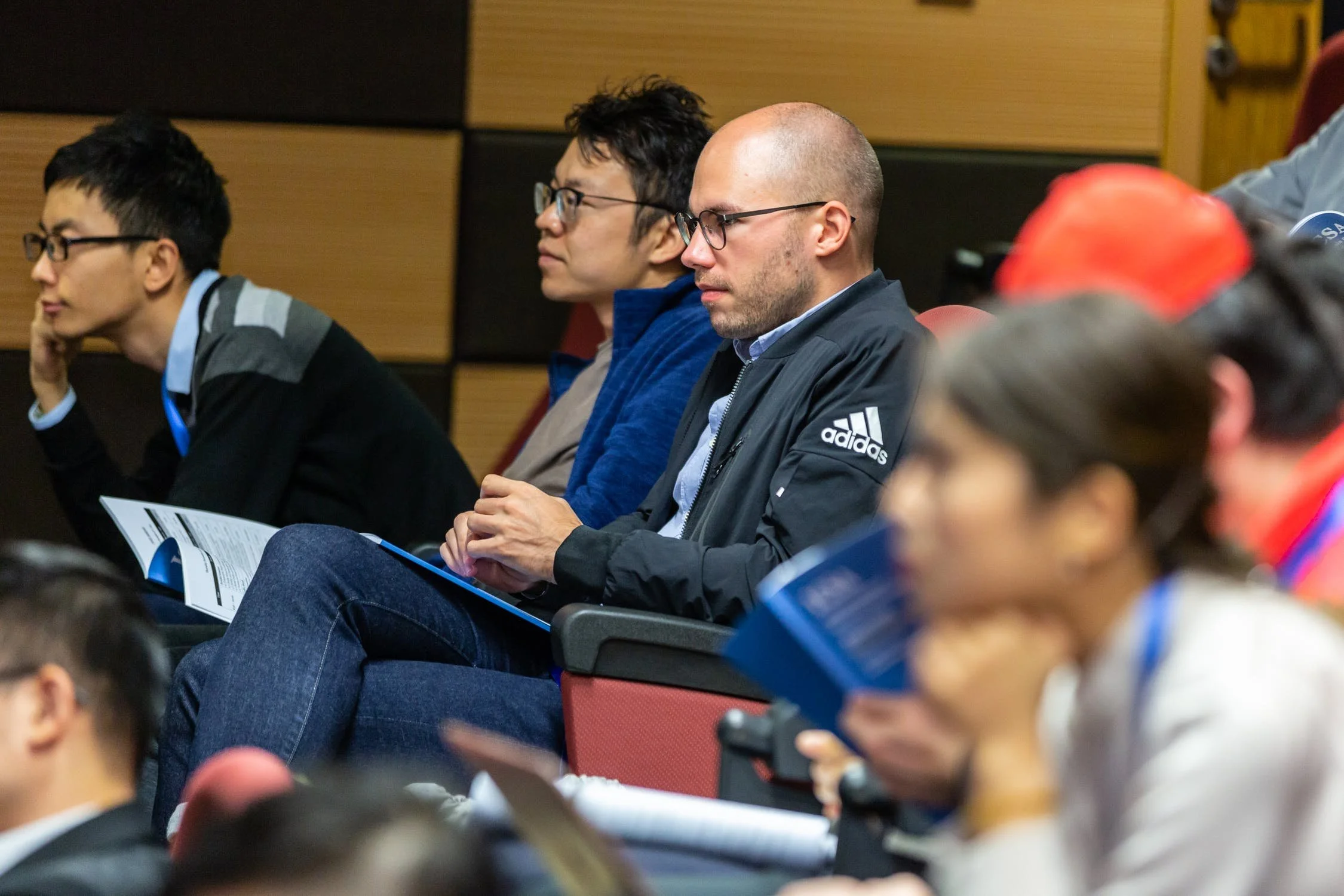
The first class of young experts was enrolled in the autumn of 2022. The first semesters start with a joint kick-off seminar, concentrating on key perspectives within DIGIT’s thematic clusters. Both researchers and stakeholders from outside the research sector will be invited to present the latest developments, and every participant will meet in roundtable discussions and present their ongoing research projects.
PhD-level course on «Qualitative digital methods for social scientists» at the University of Bergen
MET900 is a PhD-level course offered by the University of Bergen (UiB).
The course addresses how qualitative digital methods can inform research in the social sciences, including media and communications, anthropology, human geography, sociology, and political science. It will provide hands-on experience of using Qualitative digital methods, guidance on designing research using these methods, and an introduction to the interdisciplinary literature on the digital transformation of society. The course will also include a guidance and reflection on ethics in digital methodologies and strategies for preparing an application for the Norwegian Centre for Research Data for ethical approval of digital data.